


 Cart
Cart
 sales@molnova.com


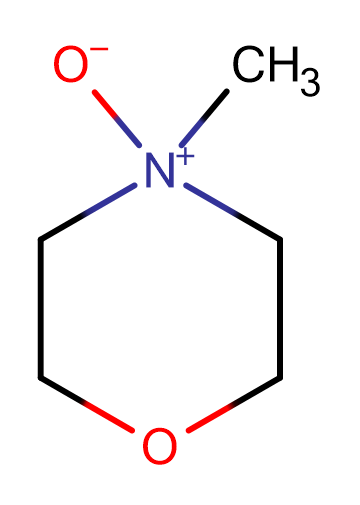
4-Methylmorpholine N-oxide
CAS No. 7529-22-8
4-Methylmorpholine N-oxide( —— )
Catalog No. M15863 CAS No. 7529-22-8
N-Methylmorpholine N-oxide (more correctly 4-methylmorpholine 4-oxide), NMO or NMMO is an organic compound.
Purity : >98% (HPLC)
 COA
Datasheet
HNMR
HPLC
MSDS
Handing Instructions
COA
Datasheet
HNMR
HPLC
MSDS
Handing Instructions
| Size | Price / USD | Stock | Quantity |
| 1 mL x 10 mM in DMSO | 28 | In Stock |


|
| 10MG | 45 | In Stock |
|
| 25MG | 61 | In Stock |
|
| 50MG | 98 | In Stock |
|
| 100MG | 129 | In Stock |
|
| 200MG | 181 | In Stock |
|
| 500MG | Get Quote | In Stock |
|
| 1G | Get Quote | In Stock |
|
Biological Information
-
Product Name4-Methylmorpholine N-oxide
-
NoteResearch use only, not for human use.
-
Brief DescriptionN-Methylmorpholine N-oxide (more correctly 4-methylmorpholine 4-oxide), NMO or NMMO is an organic compound.
-
DescriptionN-Methylmorpholine N-oxide (more correctly 4-methylmorpholine 4-oxide), NMO or NMMO is an organic compound. This heterocyclic amine oxide and morpholine derivative is used in organic chemistry as a co-oxidant and sacrificial catalyst in oxidation reactions for instance in osmium tetroxide oxidations and the Sharpless asymmetric dihydroxylation or oxidations with TPAP.
-
In Vitro——
-
In Vivo——
-
Synonyms——
-
PathwayOthers
-
TargetOther Targets
-
RecptorOthers
-
Research Area——
-
Indication——
Chemical Information
-
CAS Number7529-22-8
-
Formula Weight117.15
-
Molecular FormulaC5H11NO2
-
Purity>98% (HPLC)
-
SolubilityLimited solubility
-
SMILESC[N+]1([O-])CCOCC1
-
Chemical Name——
Shipping & Storage Information
-
Storage(-20℃)
-
ShippingWith Ice Pack
-
Stability≥ 2 years
Reference
1.Mark R. Sivik and Scott D. Edmondson. 2008
molnova catalog



related products
-
Biotin-PACAP (1-38),...
Biotin-PACAP (1-38), amide, human, ovine, rat
-
ZD-6888 Hydrochlorid...
ZD-6888 Hydrochloride, an angiotensin type 1 receptor antagonist, is used potentially for the treatment of hypertension.
-
2,3-dihydro-3,5,7-tr...
(R)-Eucomol, a flavonoid derivative, displays marginal antibacterial activity. (R)-Eucomol shows cytotoxic activity against KB and P-388 cells .
