


 Cart
Cart
 sales@molnova.com


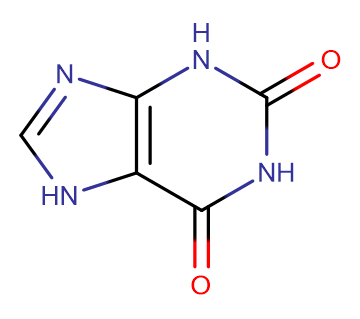
2,6-Dihydroxypurine
CAS No. 69-89-6
2,6-Dihydroxypurine( Xanthine )
Catalog No. M15681 CAS No. 69-89-6
A purine base found in most body tissues and fluids, certain plants, and some urinary calculi.
Purity : >98% (HPLC)
 COA
Datasheet
HNMR
HPLC
MSDS
Handing Instructions
COA
Datasheet
HNMR
HPLC
MSDS
Handing Instructions
| Size | Price / USD | Stock | Quantity |
| 100MG | 27 | In Stock |


|
| 200MG | Get Quote | In Stock |
|
| 500MG | Get Quote | In Stock |
|
| 1G | Get Quote | In Stock |
|
Biological Information
-
Product Name2,6-Dihydroxypurine
-
NoteResearch use only, not for human use.
-
Brief DescriptionA purine base found in most body tissues and fluids, certain plants, and some urinary calculi.
-
DescriptionA purine base found in most body tissues and fluids, certain plants, and some urinary calculi. It is an intermediate in the degradation of adenosine monophosphate to uric acid, being formed by oxidation of hypoxanthine. The methylated xanthine compounds caffeine, theobromine, and theophylline and their derivatives are used in medicine for their bronchodilator effects.
-
In Vitro——
-
In Vivo——
-
SynonymsXanthine
-
PathwayOthers
-
TargetOther Targets
-
RecptorPNP2| XPT
-
Research AreaOther Indications
-
Indication——
Chemical Information
-
CAS Number69-89-6
-
Formula Weight152.11
-
Molecular FormulaC5H4N4O2
-
Purity>98% (HPLC)
-
SolubilityWater: 69 mg/L (at 16 °C)
-
SMILESO=C(N1)NC2=C(NC=N2)C1=O
-
Chemical Name1H-Purine-2,6-dione, 3,7-dihydro-
Shipping & Storage Information
-
Storage(-20℃)
-
ShippingWith Ice Pack
-
Stability≥ 2 years
Reference
1.Overington JP, et al. Nat Rev Drug Discov. 2006 Dec;5(12):993-6.
molnova catalog



related products
-
MART-1 (27-35) (huma...
MART-1 (27-35) (human) is an immunogenic epitope recognized by HLA-A2-restricted melanoma-specific tumor-infiltrating lymphocytes (TIL).
-
Glycyrrhetinic acid
Enoxolone (INN, BAN; also known as glycyrrhetinic acid) is a pentacyclic triterpenoid derivative of the beta-amyrin type obtained from the hydrolysis of glycyrrhizic acid.
-
(+/-)-Vestitol
Vestitol has antioxidation, anti-inflammatory and antimicrobial activities, it can strongly act in a low dose and concentration and have a promising potential to be applied in the pharmaceutical and food industries. V
