


 Cart
Cart
 sales@molnova.com


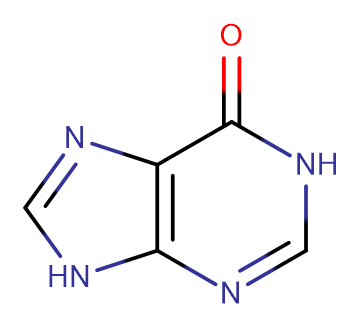
6-Hydroxypurine
CAS No. 68-94-0
6-Hydroxypurine( 6-Hydroxypurine | NSC 14665 | NSC 129419 )
Catalog No. M15636 CAS No. 68-94-0
A purine and a reaction intermediate in the metabolism of adenosine and in the formation of nucleic acids by the salvage pathway.
Purity : >98% (HPLC)
 COA
Datasheet
HNMR
HPLC
MSDS
Handing Instructions
COA
Datasheet
HNMR
HPLC
MSDS
Handing Instructions
| Size | Price / USD | Stock | Quantity |
| 1 mL x 10 mM in DMSO | 43 | In Stock |


|
| 25MG | 29 | In Stock |
|
| 50MG | 34 | In Stock |
|
| 100MG | 47 | In Stock |
|
| 200MG | Get Quote | In Stock |
|
| 500MG | 105 | In Stock |
|
| 1G | 152 | In Stock |
|
Biological Information
-
Product Name6-Hydroxypurine
-
NoteResearch use only, not for human use.
-
Brief DescriptionA purine and a reaction intermediate in the metabolism of adenosine and in the formation of nucleic acids by the salvage pathway.
-
DescriptionA purine and a reaction intermediate in the metabolism of adenosine and in the formation of nucleic acids by the salvage pathway.
-
In Vitro——
-
In Vivo——
-
Synonyms6-Hydroxypurine | NSC 14665 | NSC 129419
-
PathwayOthers
-
TargetOther Targets
-
RecptorPurine nucleoside phosphorylase
-
Research AreaOther Indications
-
Indication——
Chemical Information
-
CAS Number68-94-0
-
Formula Weight136.11
-
Molecular FormulaC5H4N4O
-
Purity>98% (HPLC)
-
SolubilityDMSO: 0.4 mg/mL (2.93 mM)
-
SMILESO=C1NC=NC2=C1N=CN2
-
Chemical Name1,9-dihydro-6H-purin-6-one
Shipping & Storage Information
-
Storage(-20℃)
-
ShippingWith Ice Pack
-
Stability≥ 2 years
Reference
1.Overington JP, et al. Nat Rev Drug Discov. 2006 Dec;5(12):993-6.
molnova catalog



related products
-
Corticotropin-releas...
Corticotropin-releasing factor human (Human CRF; Human corticotropin-releasing factor) is an immunomodulatory neuropeptide that acts to release ACTH from the anterior pituitary and stimulates the sympathetic nervous system and adrenal medulla. Functions by reducing hyperpolarizations. Acts as a functional antagonist of inflammatory mediators.
-
DOTATATE acetate
DOTATATE acetate is a DOTA-binding peptide, a growth inhibitor analog, and a novel PET tracer involved in the assessment of functional imaging of highly differentiated neuroendocrine tumors (NETs).
-
Ligustilide
Ligustilide is an effective constituent extracted from Angelica sinensis.
