


 Cart
Cart
 sales@molnova.com


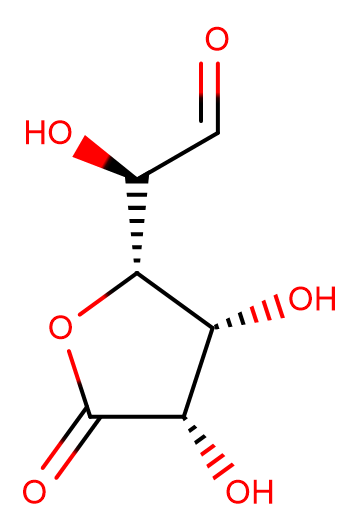
Dicurone
CAS No. 32449-92-6
Dicurone( —— )
Catalog No. M14051 CAS No. 32449-92-6
Glucuronolactone is a naturally occurring chemical that is an important structural component of nearly all connective tissues. Glucuronolactone is also found in many plant gums.
Purity : >98% (HPLC)
 COA
Datasheet
HNMR
HPLC
MSDS
Handing Instructions
COA
Datasheet
HNMR
HPLC
MSDS
Handing Instructions
| Size | Price / USD | Stock | Quantity |
| 1 mL x 10 mM in DMSO | 41 | In Stock |


|
| 100MG | Get Quote | In Stock |
|
| 200MG | Get Quote | In Stock |
|
| 500MG | Get Quote | In Stock |
|
| 1G | 27 | In Stock |
|
Biological Information
-
Product NameDicurone
-
NoteResearch use only, not for human use.
-
Brief DescriptionGlucuronolactone is a naturally occurring chemical that is an important structural component of nearly all connective tissues. Glucuronolactone is also found in many plant gums.
-
DescriptionGlucuronolactone is a naturally occurring chemical that is an important structural component of nearly all connective tissues. Glucuronolactone is also found in many plant gums.
-
In Vitro——
-
In Vivo——
-
Synonyms——
-
PathwayOthers
-
TargetOther Targets
-
RecptorOthers
-
Research Area——
-
Indication——
Chemical Information
-
CAS Number32449-92-6
-
Formula Weight176.12
-
Molecular FormulaC6H8O6
-
Purity>98% (HPLC)
-
SolubilityDMSO: 10 mM
-
SMILESC(=O)[C@@H]([C@@H]1[C@@H]([C@@H](C(=O)O1)O)O)O
-
Chemical Name——
Shipping & Storage Information
-
Storage(-20℃)
-
ShippingWith Ice Pack
-
Stability≥ 2 years
Reference
1.Suzuki S, et al. J Chromatogr Sci. 1998 Jul;36(7):357-60.
molnova catalog



related products
-
1beta-Hydroxyalantol...
1beta-Hydroxyalantolactone has protective effect against AD-like skin inflammation, can as a potential therapeutic agent for AD.
-
MG149
in clinically as an antihypertensive.
-
thymol
Thymol is a dye that is also known as 5-Methyl-2-(1-methylethyl)phenol.
