


 Cart
Cart
 sales@molnova.com


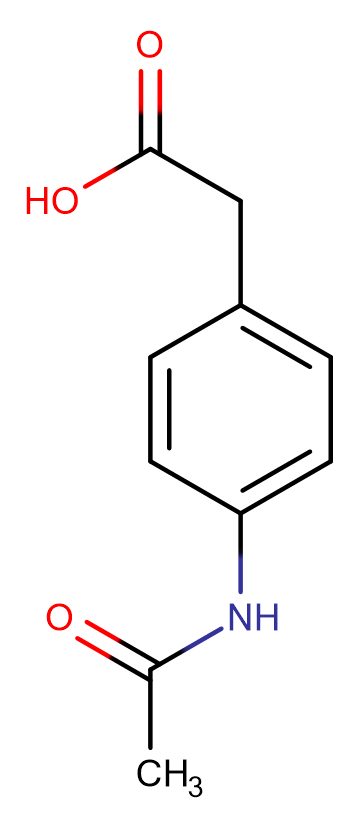
Actarit
CAS No. 18699-02-0
Actarit( MS-932 | NSC 170317 )
Catalog No. M12889 CAS No. 18699-02-0
Actarit is an anti-inflammatory drug developed in Japan for use in rheumatoid arthritis.
Purity : >98% (HPLC)
 COA
Datasheet
HNMR
HPLC
MSDS
Handing Instructions
COA
Datasheet
HNMR
HPLC
MSDS
Handing Instructions
| Size | Price / USD | Stock | Quantity |
| 100MG | Get Quote | In Stock |


|
| 200MG | 29 | In Stock |
|
| 500MG | 45 | In Stock |
|
| 1G | 65 | In Stock |
|
Biological Information
-
Product NameActarit
-
NoteResearch use only, not for human use.
-
Brief DescriptionActarit is an anti-inflammatory drug developed in Japan for use in rheumatoid arthritis.
-
DescriptionActarit is an anti-inflammatory drug developed in Japan for use in rheumatoid arthritis.
-
In Vitro——
-
In Vivo——
-
SynonymsMS-932 | NSC 170317
-
PathwayOthers
-
TargetOther Targets
-
RecptorOthers
-
Research Area——
-
Indication——
Chemical Information
-
CAS Number18699-02-0
-
Formula Weight193.2
-
Molecular FormulaC10H11NO3
-
Purity>98% (HPLC)
-
SolubilityDMSO: 10 mM
-
SMILESO=C(O)CC1=CC=C(NC(C)=O)C=C1
-
Chemical Name2-(4-acetamidophenyl)acetic acid
Shipping & Storage Information
-
Storage(-20℃)
-
ShippingWith Ice Pack
-
Stability≥ 2 years
Reference
1.Canudas N, et al. Arzneimittelforschung. 2008;58(4):182-7.
molnova catalog



related products
-
Malonic acid
Malonic acid (propanedioic acid) is the archetypal example of a competitive inhibitor: it acts against succinate dehydrogenase (complex II) in the respiratory electron transport chain. Malonic acid is found to be associated with malonyl-CoA decarboxylase deficiency which is an inborn error of metabolism.
-
Z-Ala-Trp|Z-Ala-Trp-...
Z-Ala-Trp|Z-Ala-Trp-OH
-
VIP Antagonist
VIPhyb (compound VIPhyb) is a vasoactive intestinal polypeptide (VIP) receptor antagonist that can be used in the study of cancers such as non-small cell lung cancer (NSCLC).
