


 Cart
Cart
 sales@molnova.com


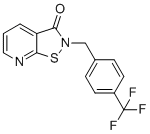
PU-141
CAS No. 168334-34-7
PU-141( PU141 | PU 141 )
Catalog No. M12570 CAS No. 168334-34-7
PU-141 is a potent, selective CBP/p300 inhibitor that inhibits SK-N-SH cell growth with GI50 of 0.48 uM.
Purity : >98% (HPLC)
 COA
Datasheet
HNMR
HPLC
MSDS
Handing Instructions
COA
Datasheet
HNMR
HPLC
MSDS
Handing Instructions
| Size | Price / USD | Stock | Quantity |
| 5MG | 873 | Get Quote |


|
| 50MG | 1782 | Get Quote |
|
| 100MG | 2250 | Get Quote |
|
| 200MG | Get Quote | Get Quote |
|
| 500MG | Get Quote | Get Quote |
|
| 1G | Get Quote | Get Quote |
|
Biological Information
-
Product NamePU-141
-
NoteResearch use only, not for human use.
-
Brief DescriptionPU-141 is a potent, selective CBP/p300 inhibitor that inhibits SK-N-SH cell growth with GI50 of 0.48 uM.
-
DescriptionPU-141 is a potent, selective CBP/p300 inhibitor that inhibits SK-N-SH cell growth with GI50 of 0.48 uM; blocks growth of SK-N-SH neuroblastoma xenografts in mice, also reduces histone lysine acetylation in vivo at concentrations that block neoplastic xenograft growth.
-
In VitroPU141 inhibits cell growth at micromolar concentrations in A431 (epidemoid carcinoma), A549 (alveolar basal epithelial adenocarcinoma), A2780 (ovarian carcinoma), HCT116 (epithelial colon carcinoma), HepG2 (hepatocellular carcinoma), MCF7 (breast carcinoma), SK-N-SH (neuroblastoma), SW480 (colon adenocarcinoma) and U-87MG (epithelial-like glioblastoma-astrocytoma).PU141 causes both histone hypoacetylation and growth inhibition in vitro. PU141 (25 μM) leads to a decrease in SAHA-induced H3K14 and H4K8 hyperacetylation, whereas H3K9 and H4K16 acetylation levels remaine stable after co-treatment of HDAC and HAT inhibitor. The impact on histone acetylation is similar in both SK-N-SH and HCT116 cells.:Cell Viability Assay Cell Line:A431 (epidemoid carcinoma), A549 (alveolar basal epithelial adenocarcinoma), A2780 (ovarian carcinoma), HCT116 (epithelial colon carcinoma), HepG2 (hepatocellular carcinoma), MCF7 (breast carcinoma), SK-N-SH (neuroblastoma), SW480 (colon adenocarcinoma) and U-87MG (epithelial-like glioblastoma-astrocytoma)Concentration:0, 10, 20, 30, 40, 50, and 60 μM Incubation Time:Result:Inhibited cell growth at micromolar concentrations in all screened cell lines. The highest cellular antiproliferative activity was detected for the neuroblastoma SK-N-SH cell line. Western Blot Analysis Cell Line:SK-N-SH neuroblastoma and HCT116 colon carcinoma cells Concentration:25 μM Incubation Time:3 hours Result:Led to a decrease in SAHA-induced H3K14 and H4K8 hyperacetylation.
-
In VivoPU141 (25 mg/kg; administered once intraperitoneally for 24 days) exhibits a significant antitumor effects against neuroblastoma xenografts in vivo. Animal Model:Male NMRI:nu/nu mice bearing a xenograft model Dosage:12.5 and 25 mg/kg Administration:Administered once intraperitoneally (i.p.) as a detergent containing saline microemulsion; for 24 days Result:Led to significant tumor volume reduction (19%) at 25 mg/kg.
-
SynonymsPU141 | PU 141
-
PathwayChromatin/Epigenetic
-
TargetHAT
-
RecptorHAT
-
Research Area——
-
Indication——
Chemical Information
-
CAS Number168334-34-7
-
Formula Weight310.294
-
Molecular FormulaC14H9F3N2OS
-
Purity>98% (HPLC)
-
SolubilityIn Vitro:?DMSO : 100 mg/mL (322.28 mM)
-
SMILESO=C1N(CC2=CC=C(C(F)(F)F)C=C2)SC3=NC=CC=C31
-
Chemical Name2-(4-(trifluoromethyl)benzyl)isothiazolo[5,4-b]pyridin-3(2H)-one
Shipping & Storage Information
-
Storage(-20℃)
-
ShippingWith Ice Pack
-
Stability≥ 2 years
Reference
1. Gajer JM, et al. Oncogenesis. 2015 Feb 9;4:e137.
2. Furdas SD, et al. Bioorg Med Chem. 2011 Jun 15;19(12):3678-89.
molnova catalog



related products
-
TTK21
TTK21 (CBP-p300 activator TTK21) is a small molecule activator of CBP/p300 histone acetyltransferase activity with a maximal effect at a concentration of 275 uM.
-
CPTH6
CPTH6 is a thiazole derivative that can reduce histone acetylation and histone acetyltransferase (HAT) activity in human leukemia cells, CPTH6 is a specific Gcn5/pCAF inhibitor.
-
CPTH2
CPTH2 is a specific histone acetyltransferase inhibitor modulating Gcn5 network in vitro and in vivo.
