


 Cart
Cart
 sales@molnova.com


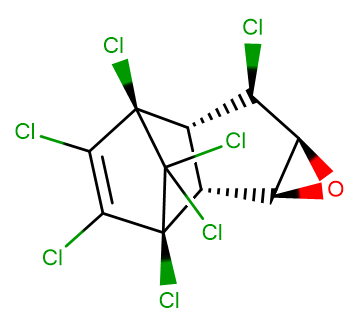
Heptachlor-endo-epoxide
CAS No. 1024-57-3
Heptachlor-endo-epoxide( —— )
Catalog No. M10112 CAS No. 1024-57-3
HEPTACHLOR EPOXIDE is an oxidation product of HEPTACHLOR formed by many plants and animals, including humans, after exposure to heptachlor.
Purity : >98% (HPLC)
 COA
Datasheet
HNMR
HPLC
MSDS
Handing Instructions
COA
Datasheet
HNMR
HPLC
MSDS
Handing Instructions
| Size | Price / USD | Stock | Quantity |
| 5MG | 58 | In Stock |


|
| 10MG | 92 | In Stock |
|
| 25MG | 165 | In Stock |
|
| 100MG | Get Quote | In Stock |
|
| 200MG | Get Quote | In Stock |
|
| 500MG | Get Quote | In Stock |
|
| 1G | Get Quote | In Stock |
|
Biological Information
-
Product NameHeptachlor-endo-epoxide
-
NoteResearch use only, not for human use.
-
Brief DescriptionHEPTACHLOR EPOXIDE is an oxidation product of HEPTACHLOR formed by many plants and animals, including humans, after exposure to heptachlor.
-
DescriptionHEPTACHLOR EPOXIDE is an oxidation product of heptachlor formed by many plants and animals, including humans, after exposure to heptachlor. It has been shown to remain in soil treated with heptachlor for over fifteen years and is toxic to animals and humans.
-
In Vitro——
-
In Vivo——
-
Synonyms——
-
PathwayOthers
-
TargetOther Targets
-
RecptorOthers
-
Research Area——
-
Indication——
Chemical Information
-
CAS Number1024-57-3
-
Formula Weight389.32
-
Molecular FormulaC10H5Cl7O
-
Purity>98% (HPLC)
-
SolubilityLimited solubility
-
SMILES[C@@H]12[C@@H]([C@H]([C@@H]3[C@H]1O3)Cl)[C@]4(C(=C([C@@]2(C4(Cl)Cl)Cl)Cl)Cl)Cl
-
Chemical Name——
Shipping & Storage Information
-
Storage(-20℃)
-
ShippingWith Ice Pack
-
Stability≥ 2 years
Reference
1. Everett CJ, Thompson OM. Rev Environ Health. 2015;30(2):93-7.
molnova catalog



related products
-
(+)-Corynoline
Corynoline is an acetylcholinesterase inhibitor.
-
CERM-11956
CERM-11956 is a calcium channel antagonist.
-
PK150
PK150 shows oral bioavailability and antibacterial activity against several pathogenic strains at submicromolar concentrations.
