


 Cart
Cart
 sales@molnova.com


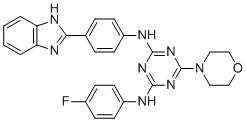
IITZ-01
CAS No. 1807988-47-1
IITZ-01( Autophagy inhibitor IITZ-01 )
Catalog No. M12762 CAS No. 1807988-47-1
IITZ-01 (Autophagy inhibitor IITZ-01) is a novel potent lysosomotropic autophagy inhibitor.
Purity : >98% (HPLC)
 COA
Datasheet
HNMR
HPLC
MSDS
Handing Instructions
COA
Datasheet
HNMR
HPLC
MSDS
Handing Instructions
| Size | Price / USD | Stock | Quantity |
| 2MG | 30 | In Stock |


|
| 5MG | 50 | In Stock |
|
| 10MG | 87 | In Stock |
|
| 25MG | 177 | In Stock |
|
| 50MG | 312 | In Stock |
|
| 100MG | 483 | In Stock |
|
| 200MG | Get Quote | In Stock |
|
| 500MG | Get Quote | In Stock |
|
| 1G | Get Quote | In Stock |
|
Biological Information
-
Product NameIITZ-01
-
NoteResearch use only, not for human use.
-
Brief DescriptionIITZ-01 (Autophagy inhibitor IITZ-01) is a novel potent lysosomotropic autophagy inhibitor.
-
DescriptionIITZ-01 (Autophagy inhibitor IITZ-01) is a novel potent lysosomotropic autophagy inhibitor, exhibits >10-fold potent autophagy inhibition along with 12- to 20-fold better cytotoxic action than Chloroquine; enhances autophagosome accumulation but inhibit autophagosomal degradation by impairing lysosomal function, finally resulting in the inhibition of autophagy, also abolishes mitochondrial membrane potential and triggers apoptosis through the mitochondria-mediated pathway (TNBC cells IC50=1.54 uM, 48 h); displays potent antitumor action in vivo through autophagy inhibition and apoptosis induction in MDA-MB-231 breast cancer xenograft model.
-
In VitroIITZ-01 (0-2 μM, 24 h) enhances autophagosomes formation as indicated by increased expression of LC3-II levels time- and dose-dependently intriple-negative breast cancer (TNBC) cell lines (MDA-MB-231 and MDA-MB-453). IITZ-01 also demonstrates potent autophagy inhibitory activity in other breast, lung, and colon cancer cells.Western Blot Analysis Cell Line:Triple-negative breast cancer (TNBC) cell lines (MDA-MB-231 and MDA-MB-453).Concentration:0-2 μM.Incubation Time:24 hours.Result:Enhanced autophagosomes formation as indicated by increased expression of LC3-II levels.
-
In VivoIITZ-01 (45 mg/kg, i.p. every alternate day for 4 weeks) inhibits average breast tumor growth when compared with control from third day of treatment in triple-negative breast tumor models in mice. Animal Model:MDA-MB-231 (TNBC)/green fluorescent protein (GFP) orthotropic breast cancer xenografts were developed in CrTac:NCr-Foxnnu BALB/c female nude mice.Dosage:45 mg/kg.Administration:Intraperitoneal every alternate day for 4 weeks.Result:Inhibited average breast tumor growth when compared with control from third day of treatment.
-
SynonymsAutophagy inhibitor IITZ-01
-
PathwayAutophagy
-
TargetAutophagy
-
RecptorAutophagy
-
Research Area——
-
Indication——
Chemical Information
-
CAS Number1807988-47-1
-
Formula Weight482.523
-
Molecular FormulaC26H23FN8O
-
Purity>98% (HPLC)
-
SolubilityDMSO : 150 mg/mL 310.87 mM; H2O : < 0.1 mg/mL
-
SMILESFC1=CC=C(NC2=NC(N3CCOCC3)=NC(NC4=CC=C(C5=NC6=CC=CC=C6N5)C=C4)=N2)C=C1
-
Chemical NameN2-(4-(1H-benzo[d]imidazol-2-yl)phenyl)-N4-(4-fluorophenyl)-6-morpholino-1,3,5-triazine-2,4-diamine
Shipping & Storage Information
-
Storage(-20℃)
-
ShippingWith Ice Pack
-
Stability≥ 2 years
Reference



-
LYN-1604 2HCl 221675...
LYN-1604 is a novel ULK1 activator.It inducing cell death involved in ATF3, RAD21, and caspase3, accompanied by autophagy and apoptosis.?LYN-1604, to be the best candidate for a ULK1 agonist.?LYN-1604 induced cell death involved in ATF3, RAD21, and caspase3, accompanied by autophagy and apoptosis.?LYN-1604 has potential for good therapeutic effects on TNBC by targeting ULK1-modulated cell death in vivo.
-
Bromobimane
Bromobimane (Monobromobimane) is a non-fluorescent substance, but reacts with thiols to produce a fluorescent product.Bromobimane is used as a probe, often in clinical medicine, to test for sulfide levels in blood.
-
EACC
EACC selectively inhibits the translocation of autophagosome-specific SNARE Stx17 thereby blocking autophagosome-lysosome fusion.?
