


 Cart
Cart
 sales@molnova.com


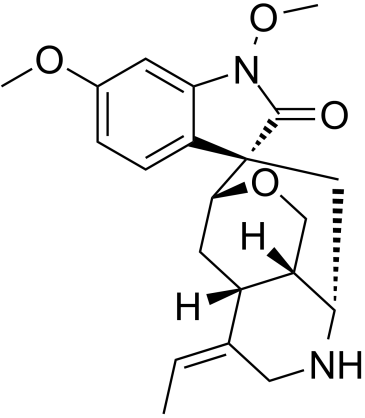
Humantenirine
CAS No. 82375-30-2
Humantenirine( —— )
Catalog No. M21813 CAS No. 82375-30-2
Humantenirine is an indole alkaloid isolated from Gelsemium sempervirens.
Purity : >98% (HPLC)
 COA
Datasheet
HNMR
HPLC
MSDS
Handing Instructions
COA
Datasheet
HNMR
HPLC
MSDS
Handing Instructions
| Size | Price / USD | Stock | Quantity |
| 5MG | 594 | Get Quote |


|
| 100MG | Get Quote | Get Quote |
|
| 200MG | Get Quote | Get Quote |
|
| 500MG | Get Quote | Get Quote |
|
| 1G | Get Quote | Get Quote |
|
Biological Information
-
Product NameHumantenirine
-
NoteResearch use only, not for human use.
-
Brief DescriptionHumantenirine is an indole alkaloid isolated from Gelsemium sempervirens.
-
DescriptionHumantenirine is an indole alkaloid isolated from Gelsemium sempervirens.
-
In Vitro——
-
In Vivo——
-
Synonyms——
-
PathwayOthers
-
TargetOther Targets
-
Recptor——
-
Research Area——
-
Indication——
Chemical Information
-
CAS Number82375-30-2
-
Formula Weight370.44
-
Molecular FormulaC??H??N?O?
-
Purity>98% (HPLC)
-
Solubility——
-
SMILESO=C(N1OC)[C@]2([C@H](OC3)C[C@]4([H])[C@@]3([H])[C@@H](NC/C4=C\C)C2)C(C1=C5)=CC=C5OC
-
Chemical Name——
Shipping & Storage Information
-
Storage(-20℃)
-
ShippingWith Ice Pack
-
Stability≥ 2 years
Reference
1. Y Schun, et al.Cytotoxic steroids of Gelsemium sempervirens. J Nat Prod. Mar-Apr 1987;50(2):195-8.
molnova catalog



related products
-
BCPA
BCPA is a non-cytotoxic Pin1 modulator.BCPA modulates osteoclast activation and attenuates the reduction of Pin1 protein, thereby inhibiting RANKL-induced receptor activators of osteoclastogenesis.BCPA is used in the study of osteoporosis.
-
Carcinoembryonic Ant...
Carcinoembryonic antigen (CEA) is a protein that is present in certain tissues of a developing baby (fetus)
-
ms48107
MS48107 is a potent and selective positive allosteric modulator of G protein-coupled receptor 68 (GPR68). It is selective for GPR68 over the closely related proton GPCRs, neurotransmitter transporters, and hERG ion channels. It can readily cross the blood-brain barrier (BBB) in mice.
