


 Cart
Cart
 sales@molnova.com


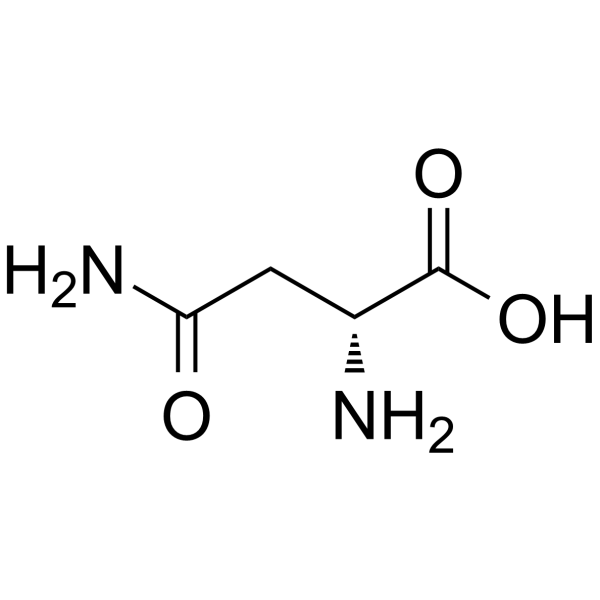
D-Asparagine
CAS No. 2058-58-4
D-Asparagine( H-D-Asn-OH )
Catalog No. M29293 CAS No. 2058-58-4
D-Asparagine is a source of nitrogen for yeast strains. D-Asparagine is a competitive inhibitor of L-Asparagine hydrolysis (Ki = 0.24 mM).
Purity : >98% (HPLC)
 COA
Datasheet
HNMR
HPLC
MSDS
Handing Instructions
COA
Datasheet
HNMR
HPLC
MSDS
Handing Instructions
| Size | Price / USD | Stock | Quantity |
| 1G | 38 | Get Quote |


|
Biological Information
-
Product NameD-Asparagine
-
NoteResearch use only, not for human use.
-
Brief DescriptionD-Asparagine is a source of nitrogen for yeast strains. D-Asparagine is a competitive inhibitor of L-Asparagine hydrolysis (Ki = 0.24 mM).
-
DescriptionD-Asparagine is a source of nitrogen for yeast strains. D-Asparagine is a competitive inhibitor of L-Asparagine hydrolysis (Ki = 0.24 mM).
-
In Vitro——
-
In Vivo——
-
SynonymsH-D-Asn-OH
-
PathwayOthers
-
TargetOther Targets
-
Recptor——
-
Research Area——
-
Indication——
Chemical Information
-
CAS Number2058-58-4
-
Formula Weight132.119
-
Molecular FormulaC4H8N2O3
-
Purity>98% (HPLC)
-
SolubilityIn Vitro:?H2O : 33.33 mg/mL (252.27 mM)
-
SMILESN[C@H](CC(N)=O)C(O)=O
-
Chemical Name——
Shipping & Storage Information
-
Storage(-20℃)
-
ShippingWith Ice Pack
-
Stability≥ 2 years
Reference



-
PKM2 activator 2
PKM2 activator 2, with an AC50 value of 66 nM, is a pyruvate kinase M2 (PKM2) activator that demonstrates anti-tumor proliferative properties and attenuates the Warburg effect by normalizing cellular glycolytic metabolism through the activation of PKM2.
-
HIF-1 alpha 556-574
HIF-1 alpha (556-574) is a hypoxia-inducible factor-1 19-mer fragment. HIF-1 functions as master regulator of response to oxygen homeostasis. Hypoxia-induced gene expression is initiated when HIF-1subunit is stabilized in response to a lack of oxygen. This part of HIF-1 binds to the von Hippel-Lindau factor (VHL) an E3 ubiquitin ligase, and the proline 564 is absolutely vital to the binding process.
-
Alisol C
Alisol C can improve glucose uptake in Hep G2 cells, it may be one of the therapeutic material basis in hypoglycemic activities in A. orientalis. Alisol C,16,23-oxido-alisol B and alisol O in Zexie may cause nephrotoxicity.
