


 Cart
Cart
 sales@molnova.com


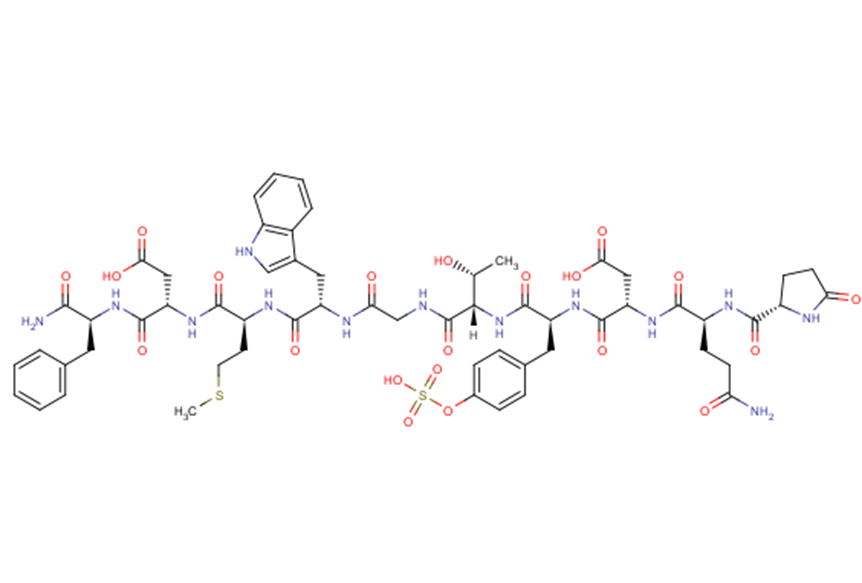
Ceruletide
CAS No. 17650-98-5
Ceruletide( Caerulein,Cerulein,FI-6934 )
Catalog No. M22615 CAS No. 17650-98-5
Ceruletide is a potent agonist of cholecystokinin receptor and it also is a safe and effective cholecystokinetic agent. It has a direct spasmogenic effect on the gallbladder muscle and bile ducts.Ceruletide is same as biologically and chemically to the human gastrointestinal hormones cholecystokinin-pancreozymin (CCK) and gastrin II.
Purity : >98% (HPLC)
 COA
Datasheet
HNMR
HPLC
MSDS
Handing Instructions
COA
Datasheet
HNMR
HPLC
MSDS
Handing Instructions
| Size | Price / USD | Stock | Quantity |
| 5MG | 411 | In Stock |


|
| 10MG | 572 | In Stock |
|
| 100MG | Get Quote | In Stock |
|
| 200MG | Get Quote | In Stock |
|
| 500MG | Get Quote | In Stock |
|
| 1G | Get Quote | In Stock |
|
Biological Information
-
Product NameCeruletide
-
NoteResearch use only, not for human use.
-
Brief DescriptionCeruletide is a potent agonist of cholecystokinin receptor and it also is a safe and effective cholecystokinetic agent. It has a direct spasmogenic effect on the gallbladder muscle and bile ducts.Ceruletide is same as biologically and chemically to the human gastrointestinal hormones cholecystokinin-pancreozymin (CCK) and gastrin II.
-
DescriptionCeruletide is a potent agonist of cholecystokinin receptor and it also is a safe and effective cholecystokinetic agent. It has a direct spasmogenic effect on the gallbladder muscle and bile ducts.Ceruletide is same as biologically and chemically to the human gastrointestinal hormones cholecystokinin-pancreozymin (CCK) and gastrin II. Ceruletide stimulates gallbladder contraction, while delaying gastric emptying and inhibiting motility in the proximal duodenum. Ceruletide in supramaximal but not in physiological doses activates NF-kappaB/Rel in vitro. This activation may induce a self-defending genetic program before the onset of cellular injury and may prevent higher degrees of damage of pancreatic acinar cells after secretagogue hyperstimulation.Ceruletide (5-15 ng/kg, i.v.) shows a marked spasmogenic effect on the pylorus of rats. Ceruletide also reduces blood pressure in anesthetized dogs. Ceruletide (0.4-0.5 mcg/kg, i.v.; 3-4 mcg/kg, s.c.) results in emesis and evacuation of the bowel in the intact conscious dog, and recovery is complete 15-30 min after i. v. administration and 2-4 hr after s.c. administration. Ceruletide SBA stimulation may perform as well as PP SBA stimulation in dogs with portosystemic shunt (PSS) and be more sensitive for the detection of hepatic dysfunction in dogs with upper respiratory disease (URD).
-
In Vitro——
-
In Vivo——
-
SynonymsCaerulein,Cerulein,FI-6934
-
PathwayGPCR/G Protein
-
TargetCholecystokinin Receptor
-
RecptorCholecystokinin
-
Research Area——
-
Indication——
Chemical Information
-
CAS Number17650-98-5
-
Formula Weight1352.41
-
Molecular FormulaC58H73N13O21S2
-
Purity>98% (HPLC)
-
SolubilityH2O:100 mg/mL (73.94 mM); DMSO:96 mg/mL (70.98 mM)
-
SMILESNC(=O)[C@H](Cc1ccccc1)NC(=O)[C@H](CC(=O)O)NC(=O)[C@H](CCSC)NC(=O)[C@H](Cc3cnc2ccccc23)NC(=O)CNC(=O)[C@@H](NC(=O)[C@H](Cc4ccc(OS(=O)(=O)O)cc4)NC(=O)[C@H](CC(=O)O)NC(=O)[C@@H](NC(=O)[C@@H]5CCC(=O)N5)CCC(N)=O)[C@@H](C)O
-
Chemical Name——
Shipping & Storage Information
-
Storage(-20℃)
-
ShippingWith Ice Pack
-
Stability≥ 2 years
Reference
1. Vincent ME, et al. Pharmacology, clinical uses, and adverse effects of ceruletide, a cholecystokinetic agent. Pharmacotherapy. 1982 Jul-Aug;2(4):223-34.
molnova catalog



related products
-
Mini Gastrin I, huma...
Mini Gastrin I, human is a shorter version of human gastrin that consists of amino acids 5-17 of the parent peptide.
-
GI 181771
GI 181771 is an agonist of the cholecystokinin 1 receptor. GI 181771 can be used in studies about obesity.
-
Spiroglumide
Spiroglumide, a CCKB-gastrin antagonist that inhibits dose-dependent pentagastrin-induced acid hypersecretion with an ID50 of 20.1 (8.67-46.4) mg / kg, could be used to explore the physiological role of gastrin in the regulation of human gastric acid secretion.
