


 Cart
Cart
 sales@molnova.com


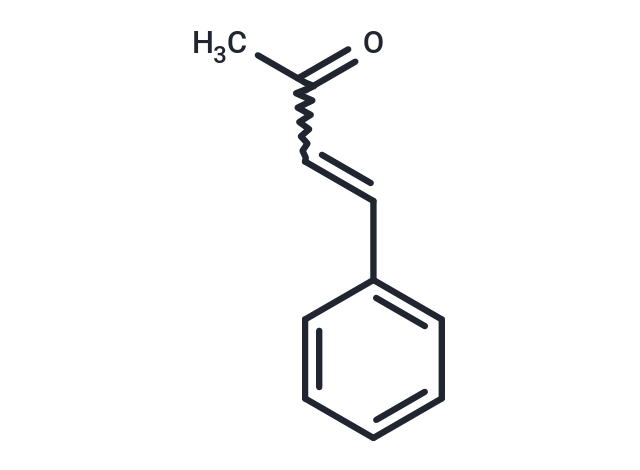
Benzylideneacetone
CAS No. 122-57-6
Benzylideneacetone( —— )
Catalog No. M37806 CAS No. 122-57-6
Benzylideneacetone, a monoterpene produced by the insect pathogenic bacterium Xenorhabdus nematophila, is a phospholipase A2 (PLA2) inhibitor with inhibitory effects on arachidonoid biosynthesis and enhances baculovirus pathogenicity of Xylaria minor.
Purity : >98% (HPLC)
 COA
Datasheet
HNMR
HPLC
MSDS
Handing Instructions
COA
Datasheet
HNMR
HPLC
MSDS
Handing Instructions
| Size | Price / USD | Stock | Quantity |
| 1G | 27 | In Stock |


|
Biological Information
-
Product NameBenzylideneacetone
-
NoteResearch use only, not for human use.
-
Brief DescriptionBenzylideneacetone, a monoterpene produced by the insect pathogenic bacterium Xenorhabdus nematophila, is a phospholipase A2 (PLA2) inhibitor with inhibitory effects on arachidonoid biosynthesis and enhances baculovirus pathogenicity of Xylaria minor.
-
DescriptionBenzylideneacetone is an endogenous metabolite.
-
In Vitro——
-
In Vivo——
-
Synonyms——
-
PathwayMetabolic Enzyme/Protease
-
TargetPhospholipase
-
RecptorPhospholipase | Endogenous Metabolite
-
Research Area——
-
Indication——
Chemical Information
-
CAS Number122-57-6
-
Formula Weight146.19
-
Molecular FormulaC10H10O
-
Purity>98% (HPLC)
-
SolubilityIn Vitro:?DMSO : 100 mg/mL (684.04 mM; Ultrasonic )
-
SMILESCC(=O)C=Cc1ccccc1
-
Chemical Name——
Shipping & Storage Information
-
Storage(-20℃)
-
ShippingWith Ice Pack
-
Stability≥ 2 years
Reference
molnova catalog



related products
-
IACS-13909
IACS-13909, a specific and potent allosteric inhibitor of SHP2, that suppresses signaling through the MAPK pathway.
-
CAY10650
CAY10650 is an effective inhibitor of cytosolic phospholipase A2α (cPLA2α, IC50: 12 nM).
-
GW 4869
A cell-permeable, symmetrical dihydroimidazolo-amide compound that acts as a potent, specific, non-competitive inhibitor of N-SMase (neutral sphingomyelinase) [IC50?= ~ 1 μM, rat brain; Km?for sphingomyelin ~13 μM].
