


 Cart
Cart
 sales@molnova.com


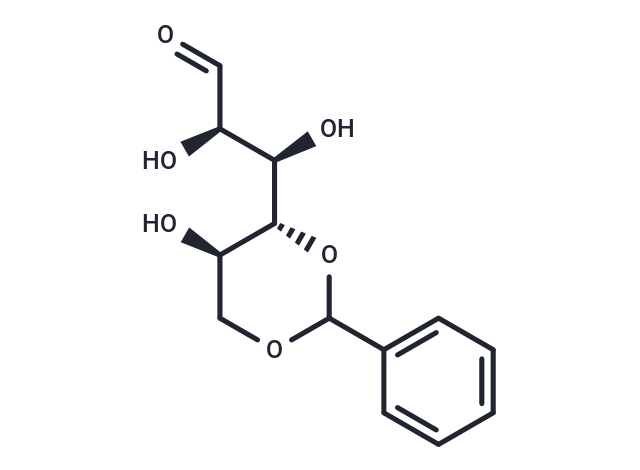
4,6-Benzilidine-D-Glucose
CAS No. 30688-66-5
4,6-Benzilidine-D-Glucose( —— )
Catalog No. M37831 CAS No. 30688-66-5
4,6-Benzilidine-D-Glucose is a clinical antitumor compound showing antitumor activity in rats with chemically induced hepatocellular carcinoma.
Purity : >98% (HPLC)
 COA
Datasheet
HNMR
HPLC
MSDS
Handing Instructions
COA
Datasheet
HNMR
HPLC
MSDS
Handing Instructions
| Size | Price / USD | Stock | Quantity |
| 500MG | 45 | Get Quote |


|
| 1G | Get Quote | Get Quote |
|
Biological Information
-
Product Name4,6-Benzilidine-D-Glucose
-
NoteResearch use only, not for human use.
-
Brief Description4,6-Benzilidine-D-Glucose is a clinical antitumor compound showing antitumor activity in rats with chemically induced hepatocellular carcinoma.
-
Description4,6-Benzilidine-D-Glucose is a clinical antitumor compound showing antitumor activity in rats with chemically induced hepatocellular carcinoma.
-
In Vitro——
-
In Vivo——
-
Synonyms——
-
PathwayOthers
-
TargetOther Targets
-
RecptorOthers
-
Research Area——
-
Indication——
Chemical Information
-
CAS Number30688-66-5
-
Formula Weight268.26
-
Molecular FormulaC13H16O6
-
Purity>98% (HPLC)
-
Solubility——
-
SMILESO[C@@H](C=O)[C@@H](O)[C@@H]1OC(OC[C@H]1O)c1ccccc1
-
Chemical Name——
Shipping & Storage Information
-
Storage(-20℃)
-
ShippingWith Ice Pack
-
Stability≥ 2 years
Reference
molnova catalog



related products
-
DSP-0565
DSP-0565 exhibits anti-convulsant activity and good safety margin in various models including scPTZ, 6 Hz, MES, and amygdala kindling.
-
Amifampridine
Amifampridine works by blocking potassium channel efflux in nerve terminals so that action potential duration is increased. Ca2+ channels can then be open for a longer time and allow greater acetylcholine release to stimulate muscle at the end plate.
-
3-Aminopropylphospho...
3-aminopropylphosphonic acid (3-APPA) is a phosphonic analog of GABA that acts as a partial agonist of GABAB receptors (IC50 = 1.5 μM in a radioligand binding assay).
