


 Cart
Cart
 sales@molnova.com


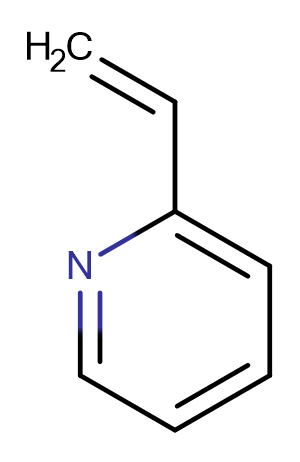
2-Vinylpyridine
CAS No. 100-69-6
2-Vinylpyridine( —— )
Catalog No. M19493 CAS No. 100-69-6
mainly used in synthetic pyridine-styrene-butadiene latex also used in the manufacture of silicon and Bestatin hydrochloride and other drugs.
Purity : >98% (HPLC)
 COA
Datasheet
HNMR
HPLC
MSDS
Handing Instructions
COA
Datasheet
HNMR
HPLC
MSDS
Handing Instructions
| Size | Price / USD | Stock | Quantity |
| 100MG | Get Quote | Get Quote |


|
| 200MG | Get Quote | Get Quote |
|
| 500MG | Get Quote | Get Quote |
|
| 1G | Get Quote | Get Quote |
|
Biological Information
-
Product Name2-Vinylpyridine
-
NoteResearch use only, not for human use.
-
Brief Descriptionmainly used in synthetic pyridine-styrene-butadiene latex also used in the manufacture of silicon and Bestatin hydrochloride and other drugs.
-
Descriptionmainly used in synthetic pyridine-styrene-butadiene latex also used in the manufacture of silicon and Bestatin hydrochloride and other drugs.
-
In Vitro——
-
In Vivo——
-
Synonyms——
-
PathwayOthers
-
TargetOther Targets
-
RecptorOthers
-
Research Area——
-
Indication——
Chemical Information
-
CAS Number100-69-6
-
Formula Weight105.14
-
Molecular FormulaC7H7N
-
Purity>98% (HPLC)
-
SolubilityDMSO:10 mM
-
SMILESC=CC1=CC=CC=N1
-
Chemical Name——
Shipping & Storage Information
-
Storage(-20℃)
-
ShippingWith Ice Pack
-
Stability≥ 2 years
Reference
1.Yang X et al. Inorg Chem. 2014 Dec 15;53(24):12986-3000.
molnova catalog



related products
-
CGRP (83-119), rat T...
Calcitonin Gene Related Peptide (CGRP) (83-119), rat (TFA) is a 37 amino acid calcitonin family of neuropeptide, acts through calcitonin receptor-like receptor.
-
BMS-986251
BMS-986251 is a Clinically Viable, Potent, and Selective RORγt Inverse Agonist.
-
Memantine
Memantine, an amantadine derivative with some dopaminergic effects, has been proposed as an antiparkinson agent and has may be used to treat moderate to severe Alzheimer's disease. It acts on the glutamatergic system by blocking NMDA receptors.
