


 Cart
Cart
 sales@molnova.com


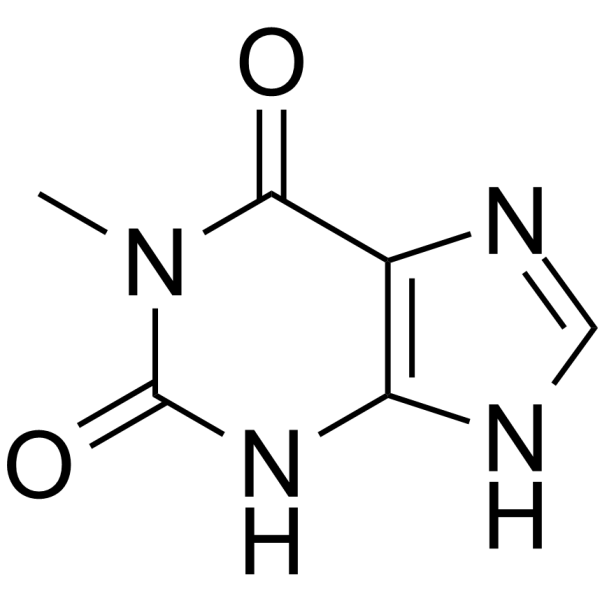
1-Methylxanthine
CAS No. 6136-37-4
1-Methylxanthine( —— )
Catalog No. M26013 CAS No. 6136-37-4
1-Methylxanthine is a caffeine derivative. 1-Methylxanthine is an essential human urinary metabolite of caffeine and theophylline (1,3-dimethylxanthine, TP).
Purity : >98% (HPLC)
 COA
Datasheet
HNMR
HPLC
MSDS
Handing Instructions
COA
Datasheet
HNMR
HPLC
MSDS
Handing Instructions
| Size | Price / USD | Stock | Quantity |
| 50MG | 37 | In Stock |


|
| 100MG | Get Quote | In Stock |
|
| 200MG | Get Quote | In Stock |
|
| 500MG | Get Quote | In Stock |
|
| 1G | Get Quote | In Stock |
|
Biological Information
-
Product Name1-Methylxanthine
-
NoteResearch use only, not for human use.
-
Brief Description1-Methylxanthine is a caffeine derivative. 1-Methylxanthine is an essential human urinary metabolite of caffeine and theophylline (1,3-dimethylxanthine, TP).
-
Description1-Methylxanthine is a caffeine derivative. 1-Methylxanthine is an essential human urinary metabolite of caffeine and theophylline (1,3-dimethylxanthine, TP). 1-Methylxanthine enhances the radiosensitivity of tumor cells.(In Vitro):1-Methylxanthine exhibits similar activities to other naturally occurring methylxanthines. Unlike caffeine and theobromine, 3-Methylxanthine, and 1-methylxanthine do not occur naturally at high levels in plants. 1-Methylxanthine (3 mM; for 30 min) increases the radiation-induced clonogenic and apoptotic cell (RKO human colorectal cancer cells carrying wild type protein 53 kDa (p53)) death.
-
In Vitro1-Methylxanthine (1-MTX; 3 mM; for 30 min) increases the radiation-induced clonogenic and apoptotic cell (RKO human colorectal cancer cells carrying wild type protein 53 kDa (p53)) death.1-Methylxanthine (1MX) exhibits similar activities to other naturally occurring methylxanthines. Unlike caffeine, TP, and theobromine, 3-Methylxanthine (3MX) and 1-methylxanthine do not occur naturally at high levels in plants.
-
In Vivo——
-
Synonyms——
-
PathwayProteasome/Ubiquitin
-
TargetEndogenous Metabolite
-
Recptor——
-
Research Area——
-
Indication——
Chemical Information
-
CAS Number6136-37-4
-
Formula Weight166.14
-
Molecular FormulaC6H6N4O2
-
Purity>98% (HPLC)
-
SolubilityIn Vitro:?DMSO : 10 mg/mL (60.19 mM)
-
SMILESCn1c(=O)[nH]c2nc[nH]c2c1=O
-
Chemical Name——
Shipping & Storage Information
-
Storage(-20℃)
-
ShippingWith Ice Pack
-
Stability≥ 2 years
Reference



-
Ovalbumins
Ovalbumins is the main protein found in egg whites. Ovalbumins have various biological activities such as antibacterial, anticancer, antihypertensive, antioxidant and immunomodulatory activities.
-
N-Acetyl-L-alanine
N-Acetyl-L-alanine is a substrate for Guanine nucleotide-binding protein G(I)/G(S)/G(O) gamma-2 subunit Myelin basic protein GTP-binding nuclear protein Ran Tropomyosin alpha 4 chain HIV-1 Rev binding protein 2 Xaa-Pro dipeptidase Thymosin beta-10 Actin-like protein 3 Alanine aminotransferase Serine/threonine protein phosphatase PP1-beta catalytic subunit 10 kDa heat shock protein (mitochondrial) Calmodulin and Beta-1-syntrophin.
-
2-Deoxycytidine-5-mo...
2'-Deoxycytidine-5'-monophosphoric acid disodium (dCMP disodium) functions as an endogenous metabolite.
