


 Cart
Cart
 sales@molnova.com


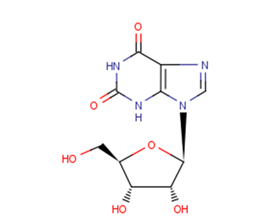
Xanthosine
CAS No. 146-80-5
Xanthosine( Xanthosine | NSC 18930 | NSC-18930 )
Catalog No. M18039 CAS No. 146-80-5
Xanthosine is produced by guanine-free mutants of bacteria e. g. Bacillus subtilis, Aerobacter aerogenes.
Purity : >98% (HPLC)
 COA
Datasheet
HNMR
HPLC
MSDS
Handing Instructions
COA
Datasheet
HNMR
HPLC
MSDS
Handing Instructions
| Size | Price / USD | Stock | Quantity |
| 50MG | 38 | In Stock |


|
| 100MG | Get Quote | In Stock |
|
| 200MG | Get Quote | In Stock |
|
| 500MG | Get Quote | In Stock |
|
| 1G | Get Quote | In Stock |
|
Biological Information
-
Product NameXanthosine
-
NoteResearch use only, not for human use.
-
Brief DescriptionXanthosine is produced by guanine-free mutants of bacteria e. g. Bacillus subtilis, Aerobacter aerogenes.
-
DescriptionXanthosine treatment has been demonstrated to promote expansion of putative mammary stem cells. Xanthosine treatment also increased the proliferation rate of bovine MEC in vitro
-
In Vitro——
-
In Vivo——
-
SynonymsXanthosine | NSC 18930 | NSC-18930
-
PathwayOthers
-
TargetOther Targets
-
RecptorOthers
-
Research Area——
-
Indication——
Chemical Information
-
CAS Number146-80-5
-
Formula Weight284.22
-
Molecular FormulaC10H12N4O6
-
Purity>98% (HPLC)
-
SolubilityDMSO : 33.33 mg/mL 117.26 mM;
-
SMILESC1=NC2=C(N1C3C(C(C(O3)CO)O)O)NC(=O)NC2=O
-
Chemical Name9-beta-D-Ribofuranosylxanthine
Shipping & Storage Information
-
Storage(-20℃)
-
ShippingWith Ice Pack
-
Stability≥ 2 years
Reference
molnova catalog



related products
-
TOK-8801
TOK-8801 is a synthetic dihydroimidazole thiazole carboxamide with immunomodulatory activity that eliminates the stimulatory effects of antibody production by removing T cells.CAS ??128-63-63-5
-
Eicosapentaenoic aci...
Eicosapentaenoic acid ethyl ester is an omega-3 fatty acid agent.
-
NPAS3-IN-1
NPAS3-IN-1 is a potent inhibitor of NPAS3-ARNT heterodimerization, modulating NPAS3 transcription by targeting the interaction between NPAS3 and ARNT at the cellular level.
