


 Cart
Cart
 sales@molnova.com


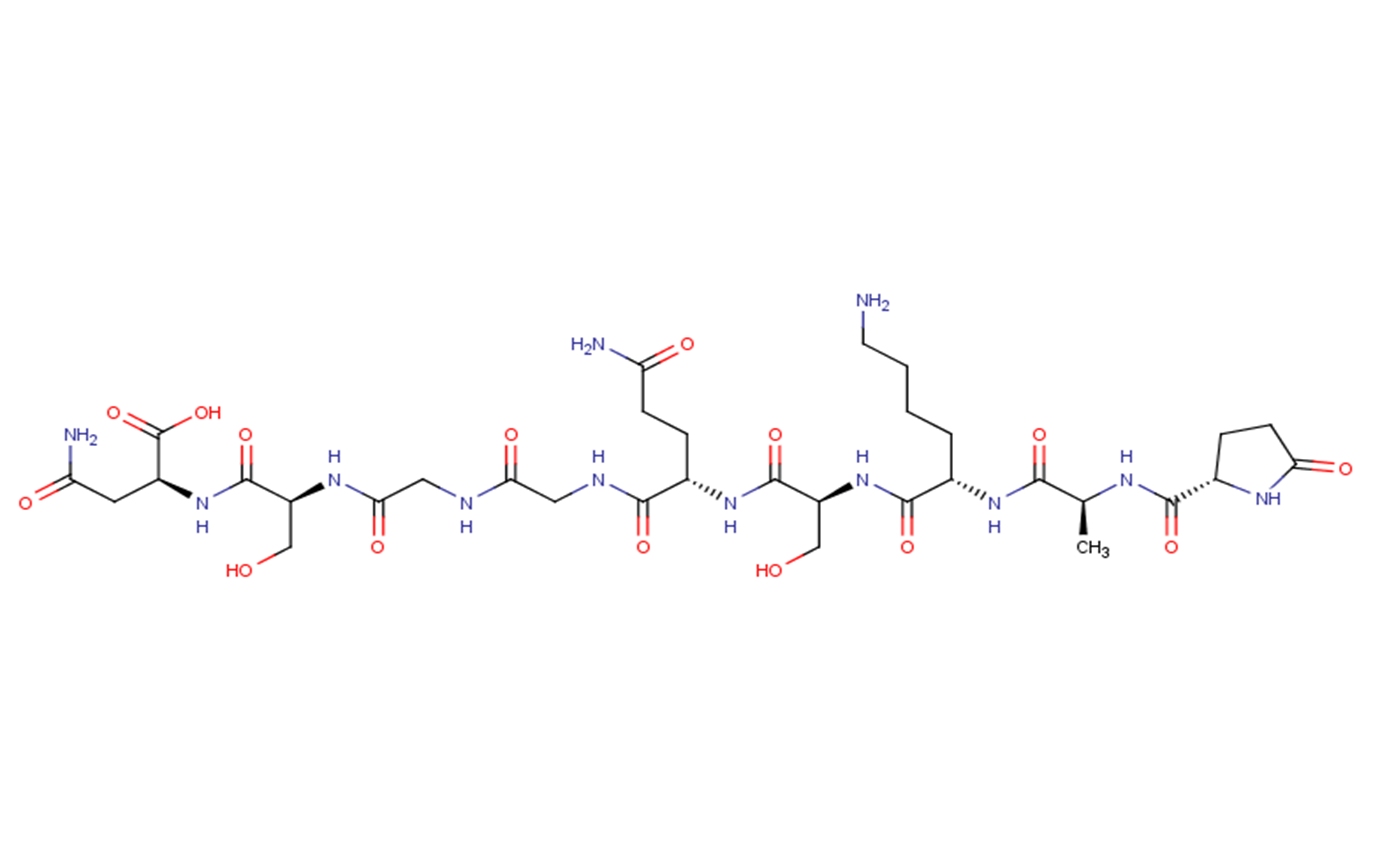
Thymulin
CAS No. 63958-90-7
Thymulin( —— )
Catalog No. M24653 CAS No. 63958-90-7
Thymulin is a peptide hormone which is mainly produced by thymic epithelial cells and it has immune-modulatory and anti-inflammatory effects.
Purity : >98% (HPLC)
 COA
Datasheet
HNMR
HPLC
MSDS
Handing Instructions
COA
Datasheet
HNMR
HPLC
MSDS
Handing Instructions
| Size | Price / USD | Stock | Quantity |
| 5MG | 91 | In Stock |


|
| 10MG | 138 | In Stock |
|
| 25MG | 248 | In Stock |
|
| 50MG | 372 | In Stock |
|
| 100MG | 552 | In Stock |
|
| 200MG | Get Quote | In Stock |
|
| 500MG | Get Quote | In Stock |
|
| 1G | Get Quote | In Stock |
|
Biological Information
-
Product NameThymulin
-
NoteResearch use only, not for human use.
-
Brief DescriptionThymulin is a peptide hormone which is mainly produced by thymic epithelial cells and it has immune-modulatory and anti-inflammatory effects.
-
DescriptionThymulin is a peptide hormone which is mainly produced by thymic epithelial cells and it has immune-modulatory and anti-inflammatory effects.
-
In Vitro——
-
In Vivo——
-
Synonyms——
-
PathwayOthers
-
TargetOther Targets
-
RecptorImmunology & Inflammation related
-
Research Area——
-
Indication——
Chemical Information
-
CAS Number63958-90-7
-
Formula Weight858.9
-
Molecular FormulaC33H54N12O15?
-
Purity>98% (HPLC)
-
SolubilityDMSO:Insoluble;Water:10 mM
-
SMILESC[C@@H](C(=O)N[C@@H](CCCCN)C(=O)N[C@@H](CO)C(=O)N[C@@H](CCC(=O)N)C(=O)NCC(=O)NCC(=O)N[C@@H](CO)C(=O)N[C@@H](CC(=O)N)C(=O)O)NC(=O)[C@@H]1CCC(=O)N1
-
Chemical Name——
Shipping & Storage Information
-
Storage(-20℃)
-
ShippingWith Ice Pack
-
Stability≥ 2 years
Reference
1.Behzad, Nasseri, Jalal,et al. Thymulin treatment attenuates inflammatory pain by modulating spinal cellular and molecular signaling pathways.[J]. International immunopharmacology, 2019.
molnova catalog



related products
-
trans-3-Indoleacryli...
trans-3-Indoleacrylic acid is a Tryptophan metabolite.
-
α-Terpinene
α-Terpinene is a terpenoidhas acaricidal antiprotozoal and antioxidant properties.
-
O-Acetyl-L-serine hy...
O-Acetylserine (OASS) is an acylated amino acid derivative. It is an intermediate in the biosynthesis of the common amino acid cysteine in bacteria and plants. Its presence in humans arises from either microbial metabolism in the gut or through consumption of foods containing OASS.
