


 Cart
Cart
 sales@molnova.com


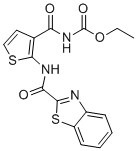
TCA-1
CAS No. 864941-32-2
TCA-1( TCA1 )
Catalog No. M16276 CAS No. 864941-32-2
A small molecule with activity against drug-resistant and persistent tuberculosis; shows bactericidal activity against nonreplicating Mtb in vitro and is efficacious in acute and chronic Mtb infection mouse models.
Purity : >98% (HPLC)
 COA
Datasheet
HNMR
HPLC
MSDS
Handing Instructions
COA
Datasheet
HNMR
HPLC
MSDS
Handing Instructions
| Size | Price / USD | Stock | Quantity |
| 2MG | 57 | In Stock |


|
| 5MG | 87 | In Stock |
|
| 10MG | 140 | In Stock |
|
| 25MG | 258 | In Stock |
|
| 50MG | 394 | In Stock |
|
| 100MG | 584 | In Stock |
|
| 200MG | Get Quote | In Stock |
|
| 500MG | Get Quote | In Stock |
|
| 1G | Get Quote | In Stock |
|
Biological Information
-
Product NameTCA-1
-
NoteResearch use only, not for human use.
-
Brief DescriptionA small molecule with activity against drug-resistant and persistent tuberculosis; shows bactericidal activity against nonreplicating Mtb in vitro and is efficacious in acute and chronic Mtb infection mouse models.
-
DescriptionA small molecule with activity against drug-resistant and persistent tuberculosis; shows bactericidal activity against nonreplicating Mtb in vitro and is efficacious in acute and chronic Mtb infection mouse models; down-regulates genes known to be involved in Mtb persistence; inhibits DprE1 and MoeW, enzymes involved in cell wall and molybdenum cofactor biosynthesis.
-
In VitroTCA1 shows bactericidal activity against both replicating (WT and drug resistant) and nonreplicating Mycobacterium tuberculosis (Mtb). TCA1 inhibits biofilm formation by Mtb H37Rv. TCA1 shows selective inhibitory activity against bacterial growth-it is inactive against Escherichia coli, Staphylococcus aureus, and Pseudomonas aeruginosa, suggesting that the target for its bactericidal activity is specific to the genus Mycobacterium.
-
In VivoTCA1 (40 mg/kg; oral gavage; 1 time/d for 5 d/week; for 4 weeks) is efficacious in acute and chronic Mtb infection mouse models.In a mouse model of Mtb infection, after i.v. administration, TCA1 exhibits a low clearance and steady-state volume of distribution, with an elimination half-life of 0.73 h. After oral administration of 20 and 50 mg/kg in solution formulation, TCA1 shows a high Cmax (2122 and 5653 nM, respectively), moderate exposure with oral bioavailability ranging from 19% to 46%, and a half-life of 1.8 h.
-
SynonymsTCA1
-
PathwayGPCR/G Protein
-
TargetAntibacterial
-
RecptorAntibacterial
-
Research Area——
-
Indication——
Chemical Information
-
CAS Number864941-32-2
-
Formula Weight375.417
-
Molecular FormulaC16H13N3O4S2
-
Purity>98% (HPLC)
-
SolubilityDMSO: Soluble ( < 1 mg/ml refers to the product slightly soluble or insoluble )
-
SMILESCCOC(=O)NC(=O)C1=C(SC=C1)NC(=O)C2=NC3=CC=CC=C3S2
-
Chemical Nameethyl (2-(benzo[d]thiazole-2-carboxamido)thiophene-3-carbonyl)carbamate
Shipping & Storage Information
-
Storage(-20℃)
-
ShippingWith Ice Pack
-
Stability≥ 2 years
Reference
1. Wang F, et al. Proc Natl Acad Sci U S A. 2013 Jul 2;110(27):E2510-7.
molnova catalog



related products
-
DSM 74
A potent, orally active PfDHODH inhibitor (IC50=0.3 uM) with antimalarial activity.
-
Cyproconazole
Cyproconazole is a triazole fungicide. It is used agriculturally for protection of crops against a wide variety of fungal pathogens.Cyproconazole has been shown to cause a dose dependent inhibition of progesterone production in human placental cells in vitro.
-
FSL 1
TLR2/6 agonist (also a putative TLR10 ligand). Activates NF-κB. Induces pro-inflammatory cytokines including IL-8, IL-1β, CCL20 and TNF-α in vitro. Synergizes with IFNγ to induce CXCL10 release from melanoma cells.
