


 Cart
Cart
 sales@molnova.com


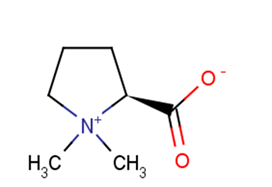
Stachydrine
CAS No. 471-87-4
Stachydrine( Proline betaine | L-stachydrine | Methyl hygrate betaine | NN-Dimethyl-L-proline )
Catalog No. M20448 CAS No. 471-87-4
Stachydrine is a major constituent of Chinese herb leonurus heterophyllus sweet used to promote blood circulation and dispel blood stasis. Stachydrine can inhibit the NF-κB signal pathway. Stachydrine is a biomarker for the consumption of citrus fruits.
Purity : >98% (HPLC)
 COA
Datasheet
HNMR
HPLC
MSDS
Handing Instructions
COA
Datasheet
HNMR
HPLC
MSDS
Handing Instructions
| Size | Price / USD | Stock | Quantity |
| 5MG | 28 | In Stock |


|
| 10MG | 43 | In Stock |
|
| 25MG | 68 | In Stock |
|
| 50MG | 91 | In Stock |
|
| 100MG | 126 | In Stock |
|
| 200MG | Get Quote | In Stock |
|
| 500MG | Get Quote | In Stock |
|
| 1G | Get Quote | In Stock |
|
Biological Information
-
Product NameStachydrine
-
NoteResearch use only, not for human use.
-
Brief DescriptionStachydrine is a major constituent of Chinese herb leonurus heterophyllus sweet used to promote blood circulation and dispel blood stasis. Stachydrine can inhibit the NF-κB signal pathway. Stachydrine is a biomarker for the consumption of citrus fruits.
-
DescriptionStachydrine is a major constituent of Chinese herb leonurus heterophyllus sweet used to promote blood circulation and dispel blood stasis. Stachydrine can inhibit the NF-κB signal pathway. Stachydrine is a biomarker for the consumption of citrus fruits.
-
In VitroStachydrine can inhibit the NF-κB signal pathway, and this may be related to the mechanism of anti-hypertrophic. Intervention of stachydrine significantly suppresses the level of p-IκB protein in the cytosol and NF-κB protein in the nucleus . Tissue factor mRNA is decreased in stachydrine-treated human umbilical vein endothelial cells. Stachydrine attenuates the decline of human umbilical vein endothelial cells viability and the increase of LDH activity induced by anoxia-reoxygenation. A dose dependent decrease in expression of mRNA, and protein levels are observed in stachydrine-treated human prostate cancer cells (PC-3 and LNcaP).
-
In VivoStachydrine attenuates norepinephrine-induced cardiomyocyte hypertrophy and has potential protective effects against β-adrenergic receptor induced Ca2+ mishandling. Stachydrine treatment reduces the expressions of PERK, CHOP, and caspase-3 in the endoplasmic reticulum stress-related apoptosis pathway.
-
SynonymsProline betaine | L-stachydrine | Methyl hygrate betaine | NN-Dimethyl-L-proline
-
PathwayApoptosis
-
TargetNF-κB
-
Recptorp65
-
Research Area——
-
Indication——
Chemical Information
-
CAS Number471-87-4
-
Formula Weight143.18
-
Molecular FormulaC7H13NO2
-
Purity>98% (HPLC)
-
SolubilityDMSO:26 mg/mL (181.59 mM);H2O:32 mg/mL (223.49 mM)
-
SMILESC[N+]1(C)CCC[C@H]1C([O-])=O
-
Chemical Name——
Shipping & Storage Information
-
Storage(-20℃)
-
ShippingWith Ice Pack
-
Stability≥ 2 years
Reference
1.Guo W Zhang C Liao Y L et al. [Effect of Leonurus stachydrine on myocardial cell hypertrophy][J]. Zhong yao cai = Zhongyaocai = Journal of Chinese medicinal materials 2012 35(6):940-943.
molnova catalog



related products
-
NF-κB/MAPK-IN-1
NF-κB/MAPK-IN-1 is a potent dual inhibitor of the NF-κB and MAPK pathways with potential anti-inflammatory activity, inhibition of NO production, and inhibition of LPS-induced activation of iNOS, COX-2, ERΚ and P38.
-
Vinpocetine
Vinpocetine is a selective inhibitor of cyclic GMP phosphodiesterase (PDE).
-
Grape Seed Extract
Grape Seed Extract is exudate from seeds of the grape plant Vitis vinifera, composed of oils and secondary plant metabolites (bioflavonoids and polyphenols) credited with important medicinal properties.
