


 Cart
Cart
 sales@molnova.com


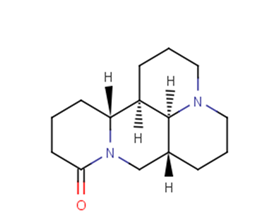
Sophoridine
CAS No. 6882-68-4
Sophoridine( —— )
Catalog No. M17569 CAS No. 6882-68-4
Sophoridine, a natural anticancer drug, has been used in China for decades. A series of novel N-substituted Sophoridinic acid derivatives were synthesized and evaluated for their cytotoxicity with 1 as the lead.
Purity : >98% (HPLC)
 COA
Datasheet
HNMR
HPLC
MSDS
Handing Instructions
COA
Datasheet
HNMR
HPLC
MSDS
Handing Instructions
| Size | Price / USD | Stock | Quantity |
| 5MG | 34 | In Stock |


|
| 10MG | 49 | In Stock |
|
| 25MG | 76 | In Stock |
|
| 50MG | 110 | In Stock |
|
| 100MG | Get Quote | In Stock |
|
| 200MG | Get Quote | In Stock |
|
| 500MG | Get Quote | In Stock |
|
| 1G | Get Quote | In Stock |
|
Biological Information
-
Product NameSophoridine
-
NoteResearch use only, not for human use.
-
Brief DescriptionSophoridine, a natural anticancer drug, has been used in China for decades. A series of novel N-substituted Sophoridinic acid derivatives were synthesized and evaluated for their cytotoxicity with 1 as the lead.
-
DescriptionSophoridine, a natural anticancer drug, has been used in China for decades. A series of novel N-substituted Sophoridinic acid derivatives were synthesized and evaluated for their cytotoxicity with 1 as the lead. The structure-activity relationship indicated that introduction of an aliphatic acyl on the nitrogen atom might significantly enhance the anticancer activity. Among the compounds, 6b bearing bromoacetyl side-chain afforded a potential effect against four human tumor cell lines (liver, colon, breast, and lung). The mechanism of action of 6b is to inhibit the activity of DNA topoisomerase I, followed by the S-phase arrest and then cause apoptotic cell death, similar to that of its parent 1.(In Vitro):Sophoridine (0-500 μM; 48 hours) exhibits remarkable inhibition effects to the growth of human pancreatic, gastric, liver, colon, gallbladder, and prostate carcinoma cells with IC50 values of about 20 μM to 200 μM.Sophoridine (0-20 μM; 48 hours) increases S phase cell population from 26.23% (control) to 38.67% in Miapaca-2 cells and from 29.56% (control) to 39.16% in PANC-1 cells, about a 1.5-fold and a 1.3-fold increase, respectively.Sophoridine (0-20 μM; 48 hours) significantly increases bad and bax levels, and decreases bcl-2 and bcl-xl levels in contrast, with a significant increase in Bax/Bcl-2 ratio.(In Vivo):Sophoridine (intraperitoneal injection; 20 or 40 mg/kg; 21 days) can inhibit the growth of xenograft pancreatic tumors.
-
In VitroSophoridine (0-500 μM; 48 hours) exhibits remarkable inhibition effects to the growth of human pancreatic, gastric, liver, colon, gallbladder, and prostate carcinoma cells with IC50 values of about 20 μM to 200 μM. Sophoridine (0-20 μM; 48 hours) increases S phase cell population from 26.23% (control) to 38.67% in Miapaca-2 cells and from 29.56% (control) to 39.16% in PANC-1 cells, about a 1.5-fold and a 1.3-fold increase, respectively.Sophoridine (0-20 μM; 48 hours) significantly increases bad and bax levels, and decreases bcl-2 and bcl-xl levels in contrast, with a significant increase in Bax/Bcl-2 ratio. Cell Viability Assay Cell Line:Normal cells: IOSE144, HL-7702 and LO2, BEAS-2B, GES-1, HEK 293 T, HPDE, FHC, Human cancer cells: PANC-1, Mapaca-1, hepG2, SGC-7901, CBC-SD,SGC-996,PC-3,MKN-45,MGC-803,Hela and HCT116 cells Concentration:0, 3.9, 7.8, 15.5, 31, 62.5, 125, 250, 500 μMIncubation Time:48 hours Result:Exhibited the most potent cytotoxicity to cancer cells.Cell Cycle Analysis Cell Line:PANC-1 cells; Miapca-2 cells Concentration:20 μM Incubation Time:48 hours Result:Led to accumulated population in the S phase.Western Blot Analysis Cell Line:PANC-1 cells; Miapca-2 cells Concentration:20 μM Incubation Time:48 hours Result:Inducedthe activation of intrinsic apoptosis pathway.
-
In VivoSophoridine (intraperitoneal injection; 20 or 40 mg/kg; 21 days) can inhibit the growth of xenograft pancreatic tumors. Animal Model:BALB/c homozygous (nu/nu) nude mice Dosage:20 or 40 mg/kg Administration: Intraperitoneal injection; 20 or 40 mg/kg; 21 days Result:Decreased xenograft pancreatic tumors mass.
-
Synonyms——
-
PathwayMembrane Transporter/Ion Channel
-
TargetBeta Amyloid
-
RecptorTopo I
-
Research AreaOthers-Field
-
Indication——
Chemical Information
-
CAS Number6882-68-4
-
Formula Weight248.36
-
Molecular FormulaC15H24N2O
-
Purity>98% (HPLC)
-
SolubilityIn Vitro:?DMSO : 50 mg/mL (201.32 mM)
-
SMILESC1C[C@@H]2[C@H]3CCCN4[C@H]3[C@H](CCC4)CN2C(=O)C1
-
Chemical Name——
Shipping & Storage Information
-
Storage(-20℃)
-
ShippingWith Ice Pack
-
Stability≥ 2 years
Reference
1. Li X, et al. Bioorg Med Chem Lett. 2011, 21(18):5251-4.
molnova catalog



related products
-
PQM130
PQM130 is a Feruloyl-Donepezil Hybrid compound against the neurotoxicity induced by Aβ1-42 oligomer (AβO) and shows anti-inflammatory activity. PQM130 can be used in anti-AD studies.
-
β-Amyloid 1-17
This synthetic peptide consists of amino acids 1 to 17 of beta amyloid protein. This peptide can be employed in beta amyloid solubility studies.
-
Buntanetap
Buntanetap ((+)-Phenserine) is an orally active inhibitor of polyneurotoxic proteins (TINAPs) for the study of neurological disorders, endocrine and metabolic disorders, and cardiovascular diseases.
