


 Cart
Cart
 sales@molnova.com


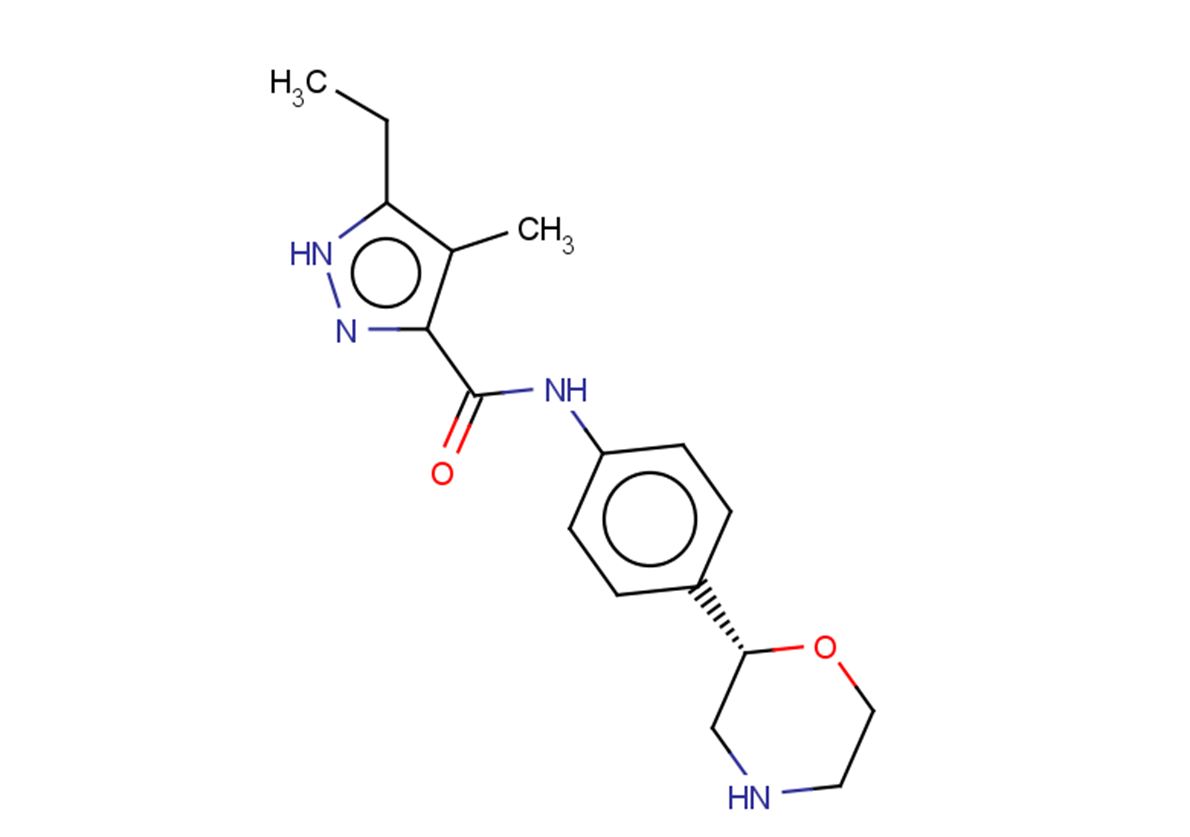
Ralmitaront
CAS No. 2133417-13-5
Ralmitaront ( RO6889450 )
Catalog No. M23969 CAS No. 2133417-13-5
Ralmitaront is a potent, orally active partial agonist of the trace amine-associated receptor 1 (TAAR1).
Purity : >98% (HPLC)
 COA
Datasheet
HNMR
HPLC
MSDS
Handing Instructions
COA
Datasheet
HNMR
HPLC
MSDS
Handing Instructions
| Size | Price / USD | Stock | Quantity |
| 5MG | 267 | In Stock |


|
| 10MG | 434 | In Stock |
|
| 25MG | 669 | In Stock |
|
| 50MG | 896 | In Stock |
|
| 100MG | 1269 | In Stock |
|
| 200MG | 1701 | In Stock |
|
| 500MG | Get Quote | In Stock |
|
| 1G | Get Quote | In Stock |
|
Biological Information
-
Product NameRalmitaront
-
NoteResearch use only, not for human use.
-
Brief DescriptionRalmitaront is a potent, orally active partial agonist of the trace amine-associated receptor 1 (TAAR1).
-
DescriptionRalmitaront is a potent, orally active partial agonist of the trace amine-associated receptor 1 (TAAR1).
-
SynonymsRO6889450
-
PathwayOthers
-
TargetOther Targets
-
Recptoramine-associated receptor 1 (TAAR1)
-
Research Area——
-
Indication——
Chemical Information
-
CAS Number2133417-13-5
-
Formula Weight314.4
-
Molecular FormulaC17H22N4O2
-
Purity>98% (HPLC)
-
SolubilityDMSO:90mg/ml(286.28mM; Need ultrasonic)
-
SMILESCCc1c(C)c(C(Nc2ccc([C@@H]3OCCNC3)cc2)=O)n[nH]1
-
Chemical Name——
Shipping & Storage Information
-
Storage(-20℃)
-
ShippingWith Ice Pack
-
Stability≥ 2 years
Reference
1.Brady LS, Potter WZ, Gordon JA. Redirecting the revolution: new developments in drug development for psychiatry. Expert Opin Drug Discovery. 2019;14:1213–1219.
molnova catalog


related products
-
Ricinoleic acid
Ricinoleic acid is a natural product that constitutes about 90% of the fatty acids in castor oil.?
-
Homosalate
Homosalate is an organic compound used in some sunscreens. It is an ester formed from salicylic acid and 3,3,5-trimethylcyclohexanol, a derivative of cyclohexanol.
-
(E)-1-methoxy-2-O-(p...
The herbs of Taxus cuspidata.
