


 Cart
Cart
 sales@molnova.com


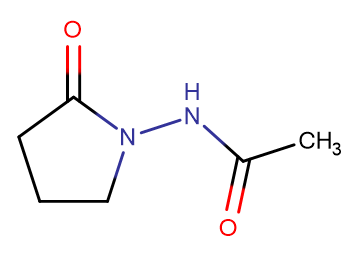
Piracetam
CAS No. 7491-74-9
Piracetam( UCB 6215 )
Catalog No. M15855 CAS No. 7491-74-9
Piracetam is a cyclic derivative of the neurotransmitter gamma-aminobutyric acid (GABA), used in treatment of a wide range of cognitive disorders.
Purity : >98% (HPLC)
 COA
Datasheet
HNMR
HPLC
MSDS
Handing Instructions
COA
Datasheet
HNMR
HPLC
MSDS
Handing Instructions
| Size | Price / USD | Stock | Quantity |
| 500MG | 41 | In Stock |


|
| 1G | 51 | In Stock |
|
Biological Information
-
Product NamePiracetam
-
NoteResearch use only, not for human use.
-
Brief DescriptionPiracetam is a cyclic derivative of the neurotransmitter gamma-aminobutyric acid (GABA), used in treatment of a wide range of cognitive disorders.
-
DescriptionPiracetam is a cyclic derivative of the neurotransmitter gamma-aminobutyric acid (GABA), used in treatment of a wide range of cognitive disorders.(In Vitro):Piracetam (UCB-6215) is able to significantly decrease the fusogenic and destabilising effect of Abeta 29-42, in a concentration-dependent manner. Preincubation of piracetam, at a piracetam/peptide ratio of 960, during 20 min before the addition of Abeta 29-42 prevents almost completely the mixture of the two fluorescent probes. Preincubation of piracetam with lipids prevents almost completely the release of calcein induced by the peptide in a dose-dependent fashion (piracetam/peptide ratios from 9.6 to 960).(In Vivo):Piracetam (UCB-6215) (< 1.0 mM) preincubated with brain membranes enhances membrane fluidity in aged mice, rats and humans, as indicated by decreased anisotropy of the membrane-bound fluorescence probe 1,6-diphenyl-1,3,5-hexatriene (DPH). Piracetam (UCB-6215) (300 mg/kg once daily) significantly increases membrane fluidity in some brain regions of young and aged rats, but has no measurable effect on membrane fluidity in the young rats. Piracetam (UCB-6215) (300 mg/kg daily for 6 weeks) improves active avoidance learning in the aged rats only and elevates membrane fluidity in all brain regions except the cerebellum in the aged rats. Piracetam (UCB-6215) (300 mg/kg daily for 6 weeks) also improves NMDA receptor density in the hippocampus and on muscarinic cholinergic receptor densities in the frontal cortex and the striatum and to a lesser extent in the hippocampus of rats.
-
In Vitro——
-
In Vivo——
-
SynonymsUCB 6215
-
PathwayNeuroscience
-
TargetGluR
-
RecptorAMPA
-
Research AreaNeurological Disease
-
Indication——
Chemical Information
-
CAS Number7491-74-9
-
Formula Weight142.16
-
Molecular FormulaC6H10N2O2
-
Purity>98% (HPLC)
-
SolubilityWater: 72 mg/mL (506.47 mM); DMSO: 72 mg/mL (506.47 mM)
-
SMILESO=C1N(NC(C)=O)CCC1
-
Chemical Name1-Acetamido-2-pyrrolidinone
Shipping & Storage Information
-
Storage(-20℃)
-
ShippingWith Ice Pack
-
Stability≥ 2 years
Reference
1.Mingeot-Leclercq MP, et al. Biochim Biophys Acta, 2003, 1609(1), 28-38.
molnova catalog



related products
-
Ziyuglycoside II
Ziyuglycoside II has anticancer, and antitumor properties against gastric cancer and breast cancer cells, by cell cycle arrest and cell apoptosis.
-
4-oxo-1,4-dihydroqui...
4-oxo-1,4-dihydroquinoline-2-carboxylic acid is a GluR and NMDA inhibitor.
-
Pyridostatin TFA
Pyridostatin Trifluoroacetate Salt is a G-quadruplexe stabilizer with Kd of 490 nM in a cell-free assay, which targets a series of proto-oncogenes including c-kit, K-ras and Bcl-2.
