


 Cart
Cart
 sales@molnova.com


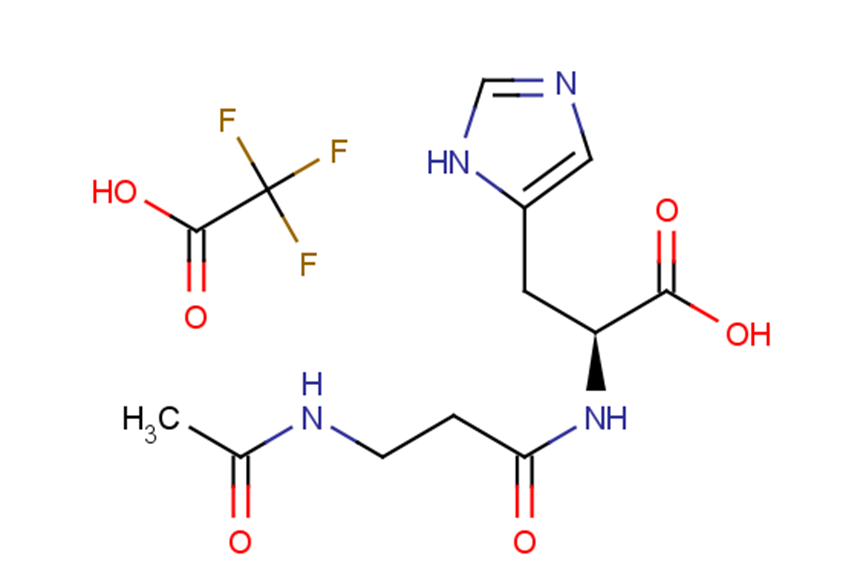
N-Acetylcarnosine
CAS No. 56353-15-2
N-Acetylcarnosine( N-Acetyl-L-carnosine )
Catalog No. M22292 CAS No. 56353-15-2
N-acetylcarnosine (NAC) is thought to be able to combat some of the effects of oxidative stress as it has anti-oxidant properties.Right eyes of the rabbits (male grey chinchilla rabbits aged 3-4 months weighing 2-3 k) are instilled with 80 μL of formulation A containing 1 % N-Acetylcarnosine.
Purity : >98% (HPLC)
 COA
Datasheet
HNMR
HPLC
MSDS
Handing Instructions
COA
Datasheet
HNMR
HPLC
MSDS
Handing Instructions
| Size | Price / USD | Stock | Quantity |
| 500MG | 37 | In Stock |


|
| 1G | Get Quote | In Stock |
|
Biological Information
-
Product NameN-Acetylcarnosine
-
NoteResearch use only, not for human use.
-
Brief DescriptionN-acetylcarnosine (NAC) is thought to be able to combat some of the effects of oxidative stress as it has anti-oxidant properties.Right eyes of the rabbits (male grey chinchilla rabbits aged 3-4 months weighing 2-3 k) are instilled with 80 μL of formulation A containing 1 % N-Acetylcarnosine.
-
DescriptionN-acetylcarnosine (NAC) is thought to be able to combat some of the effects of oxidative stress as it has anti-oxidant properties.Right eyes of the rabbits (male grey chinchilla rabbits aged 3-4 months weighing 2-3 k) are instilled with 80 μL of formulation A containing 1 % N-Acetylcarnosine. The N-Acetylcarnosine prodrug eye drops optimize the clinical effects for the treatment of ophthalmic disorders (such as prevention and reversal of cataracts in human and animal eyes).
-
In Vitro——
-
In Vivo——
-
SynonymsN-Acetyl-L-carnosine
-
PathwayOthers
-
TargetOther Targets
-
RecptorOthers
-
Research Area——
-
Indication——
Chemical Information
-
CAS Number56353-15-2
-
Formula Weight268.27
-
Molecular FormulaC11H16N4O4
-
Purity>98% (HPLC)
-
SolubilityH2O:250 mg/mL (931.90 mM; Need ultrasonic)
-
SMILESCC(=O)NCCC(=O)NC(CC1=CN=CN1)C(=O)O
-
Chemical Name——
Shipping & Storage Information
-
Storage(-20℃)
-
ShippingWith Ice Pack
-
Stability≥ 2 years
Reference
1.Babizhayev MA, et al. N-Acetylcarnosine, a natural histidine-containing dipeptide, as a potent ophthalmic drug in treatment of human cataracts. Peptides. 2001 Jun;22(6):979-94.
molnova catalog



related products
-
L-Threonic acid Calc...
Threonic acid is probably derived from glycated proteins or from the degradation of ascorbic acid. It is a normal component is aqeous humour and blood. Threonic acid is a substrate of L-threonate 3-dehydrogenase in ascorbate and aldarate metabolism pathway.
-
3-Hydroxyxanthyletin
3'-Hydroxyxanthyletin showed antimycobacterial activities against Mycobacterium tuberculosis H(37)R(V) in vitro with MIC values of 16 microg/ml.
-
Moxnidazole
Moxnidazole, a 5-nitroimidazole, is mutagenic in microbial assays and in Drosophila, inducing genetic alterations in mouse somatic cells.
