


 Cart
Cart
 sales@molnova.com


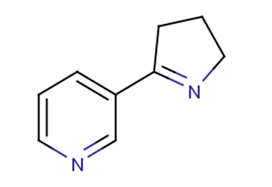
Myosmine
CAS No. 532-12-7
Myosmine( —— )
Catalog No. M20968 CAS No. 532-12-7
Myosmine is a minor tobacco alkaloid that is structurally related to nicotine.
Purity : >98% (HPLC)
 COA
Datasheet
HNMR
HPLC
MSDS
Handing Instructions
COA
Datasheet
HNMR
HPLC
MSDS
Handing Instructions
| Size | Price / USD | Stock | Quantity |
| 100MG | 37 | Get Quote |


|
| 200MG | 60 | Get Quote |
|
| 500MG | 107 | Get Quote |
|
| 1G | Get Quote | Get Quote |
|
Biological Information
-
Product NameMyosmine
-
NoteResearch use only, not for human use.
-
Brief DescriptionMyosmine is a minor tobacco alkaloid that is structurally related to nicotine.
-
DescriptionMyosmine is a minor tobacco alkaloid that is structurally related to nicotine.
-
In VitroMyosmine is easily nitrosated, yielding 4-hydroxy-1-(3-pyridyl)-1-butanone (HPB) and the esophageal tobacco carcinogen N'-nitrosonornicotine.
-
In VivoMyosmine (0.001, 0.005, 0.5, and 50 micromol/kg; oral; in Wistar rats) causes a higher percentage of the radioactivity excreted in urine (86.2% and 88.9%) at the two lower doses (0.001 and 0.005 micromol/kg),as compared with the higher doses (0.5 and 50 micromol/kg), where only 77.8% and 75.4% of the dose is found in urine.
-
Synonyms——
-
PathwayOthers
-
TargetOther Targets
-
RecptorOthers
-
Research Area——
-
Indication——
Chemical Information
-
CAS Number532-12-7
-
Formula Weight146.19
-
Molecular FormulaC9H10N2
-
Purity>98% (HPLC)
-
SolubilityIn Vitro:?H2O : ≥ 100 mg/mL (684.04 mM))
-
SMILESc1cncc(C2=NCCC2)c1
-
Chemical Name——
Shipping & Storage Information
-
Storage(-20℃)
-
ShippingWith Ice Pack
-
Stability≥ 2 years
Reference
1.Zwickenpflug W Tyroller S Richter E . Metabolism of myosmine in Wistar rats.[J]. Drug Metabolism & Disposition the Biological Fate of Chemicals 2005 33(11):1648.
molnova catalog



related products
-
Neuron Specific Pept...
Neuron Specific Peptide
-
Stellasterol
Stellasterol is a nartural product from Ganoderma lucidum.
-
Europine
Europine shows both antifungal and insect antifeedant activity.
