


 Cart
Cart
 sales@molnova.com


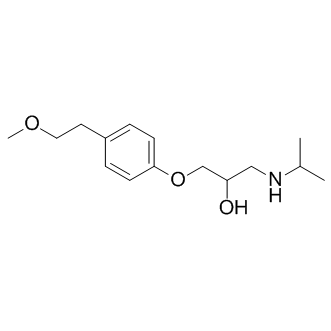
Metoprolol
CAS No. 51384-51-1
Metoprolol( Metoprolol | Loresor | Preblok | Metohexal | Selo-Zok )
Catalog No. M14778 CAS No. 51384-51-1
A selective β1 receptor blocker used in treatment of several diseases of the cardiovascular system, especially hypertension.
Purity : >98% (HPLC)
 COA
Datasheet
HNMR
HPLC
MSDS
Handing Instructions
COA
Datasheet
HNMR
HPLC
MSDS
Handing Instructions
| Size | Price / USD | Stock | Quantity |
| 100MG | Get Quote | In Stock |


|
| 200MG | Get Quote | In Stock |
|
| 500MG | Get Quote | In Stock |
|
| 1G | Get Quote | In Stock |
|
Biological Information
-
Product NameMetoprolol
-
NoteResearch use only, not for human use.
-
Brief DescriptionA selective β1 receptor blocker used in treatment of several diseases of the cardiovascular system, especially hypertension.
-
DescriptionA selective β1 receptor blocker used in treatment of several diseases of the cardiovascular system, especially hypertension.Hypertension Approved.
-
In VitroMetoprolol (0-1000 μg/mL; 24-72 h) shows cytotoxic effect on U937 and MOLT-4 cells dose and time dependently.Cell Cytotoxicity Assay Cell Line:U937 and MOLT-4 cellsConcentration:1, 10, 50, 100, 500 and 1000 μg/mL Incubation Time:24, 48 and 72 h Result:Significantly decreased the viability of U937 and MOLT-4 cells at 1000 μg/mL (3740.14μM) concentration after 48 hours incubation time, significantly reduced the viability of U937 cells at ≥500 μg/ml (≥1870.07μM) concentrations after 72 hours incubation time, and significantly decreased the viability of MOLT4 cells at ≥100 μg/ml (≥374.01μM) concentrations after 72 hours incubation.
-
In VivoMetoprolol (2.5 mg/kg/h; infusion; 11 weeks) reduces proinflammatory cytokines and atherosclerosis in ApoE?/? Mice.Metoprolol (15 mg/kg/q12h; i.g.; 5 days) shows anti-inflammation and anti-virus effects in murine model with coxsackievirus B3-induced viral myocarditis.Metoprolol (2.5 mg/kg; i.v.; 3 bolus injections) significantly decreased activated caspase-9 protein expression and inhibits myocardial apoptosis in coronary microembolization (CME) rats. Animal Model:Male ApoE?/? mice Dosage:2.5?mg/kg/h Administration:Via osmotic minipumps, 11 weeks Result:Significantly reduced atherosclerotic plaque area in thoracic aorta, reduced serum TNFα and the chemokine CXCL1 as well as decreasing the macrophage content in the plaques.Animal Model:Balb/c mice, coxsackievirus B3 (CVB3) induced viral myocarditis (VMC) model Dosage:15 mg/kg/q12h Administration:Oral gavage, 5 consecutive days Result:Reduced pathological scores of VMC induced by CVB3 infection, protected the myocardium against viral damage by reducing serum cTn-I levels. Decreased the levels of myocardial pro-inflammatory cytokines and increase the expression of anti-inflammatory cytokine. Significantly decreased myocardial virus titers.
-
SynonymsMetoprolol | Loresor | Preblok | Metohexal | Selo-Zok
-
PathwayGPCR/G Protein
-
TargetAdrenergic Receptor
-
RecptorAdrenergic Receptor
-
Research AreaCardiovascular Disease
-
IndicationHypertension
Chemical Information
-
CAS Number51384-51-1
-
Formula Weight267.3639
-
Molecular FormulaC15H25NO3
-
Purity>98% (HPLC)
-
SolubilityDMSO
-
SMILESOC(COC1=CC=C(CCOC)C=C1)CNC(C)C
-
Chemical Name2-Propanol, 1-[4-(2-methoxyethyl)phenoxy]-3-[(1-methylethyl)amino]-
Shipping & Storage Information
-
Storage(-20℃)
-
ShippingWith Ice Pack
-
Stability≥ 2 years
Reference
molnova catalog



related products
-
Azepexole hydrochlor...
Azepexole hydrochloride (4H-Oxazolo[4,5-d]azepin-2-amine, 6-ethyl-5,6,7,8-tetrahydro-, hydrochloride (1:1)) is a potent α2-Adrenoceptor agonist with anaesthetic effects.
-
Guanabenz acetate
An α2 adrenergic receptor that is used as an antihypertensive drug.
-
Ecastolol
Ecastolol has anti-angina activity and is an adrenergic receptor antagonist.
