


 Cart
Cart
 sales@molnova.com


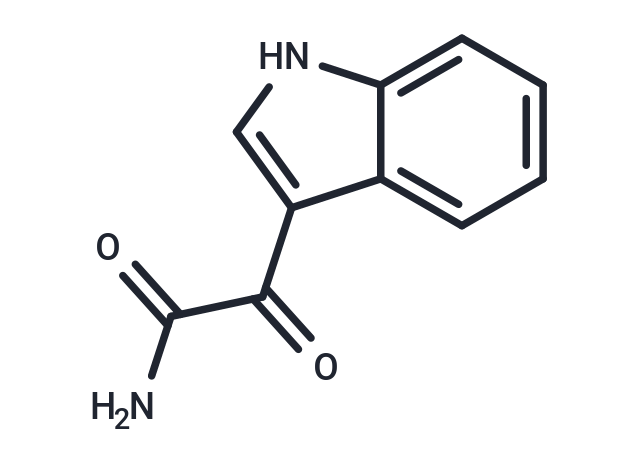
Indole-3-glyoxylamide
CAS No. 5548-10-7
Indole-3-glyoxylamide( —— )
Catalog No. M37816 CAS No. 5548-10-7
Indole-3-glyoxylamide (3-Indoleglyoxamide) is a marine derived natural products found in Spongosorites sp.
Purity : >98% (HPLC)
 COA
Datasheet
HNMR
HPLC
MSDS
Handing Instructions
COA
Datasheet
HNMR
HPLC
MSDS
Handing Instructions
| Size | Price / USD | Stock | Quantity |
| 1 mL x 10 mM in DMSO | 341 | In Stock |


|
| 2MG | 296 | In Stock |
|
| 5MG | 426 | In Stock |
|
| 10MG | 625 | In Stock |
|
| 25MG | 908 | In Stock |
|
| 50MG | 1270 | In Stock |
|
| 100MG | Get Quote | In Stock |
|
| 200MG | Get Quote | In Stock |
|
| 500MG | Get Quote | In Stock |
|
| 1G | Get Quote | In Stock |
|
Biological Information
-
Product NameIndole-3-glyoxylamide
-
NoteResearch use only, not for human use.
-
Brief DescriptionIndole-3-glyoxylamide (3-Indoleglyoxamide) is a marine derived natural products found in Spongosorites sp.
-
DescriptionIndole-3-glyoxylamide (3-Indoleglyoxamide) is a marine derived natural products found in Spongosorites sp.
-
In Vitro——
-
In Vivo——
-
Synonyms——
-
PathwayOthers
-
TargetOther Targets
-
RecptorOthers
-
Research Area——
-
Indication——
Chemical Information
-
CAS Number5548-10-7
-
Formula Weight188.18
-
Molecular FormulaC10H8N2O2
-
Purity>98% (HPLC)
-
Solubility——
-
SMILESNC(=O)C(=O)c1c[nH]c2ccccc12
-
Chemical Name——
Shipping & Storage Information
-
Storage(-20℃)
-
ShippingWith Ice Pack
-
Stability≥ 2 years
Reference
molnova catalog



related products
-
C-2-Decoumaroylaloer...
C-2-Decoumaroylaloeresin G
-
Ac2-26 TFA
Ac2-26 TFA, an active N-terminal peptide of annexin A1 (AnxA1), attenuates ischemia-reperfusion-induced acute lung injury. Ac2-26 also decreases AnxA1 protein expression, inhibits the activation of NF-κB and MAPK pathways in the injured lung tissue.
-
Platycoside E
Platycoside E?is a platycodigenin-type saponin isolated from the root of Platycodon grandiflorum with haemolytic activity and adjuvant potential.
