


 Cart
Cart
 sales@molnova.com


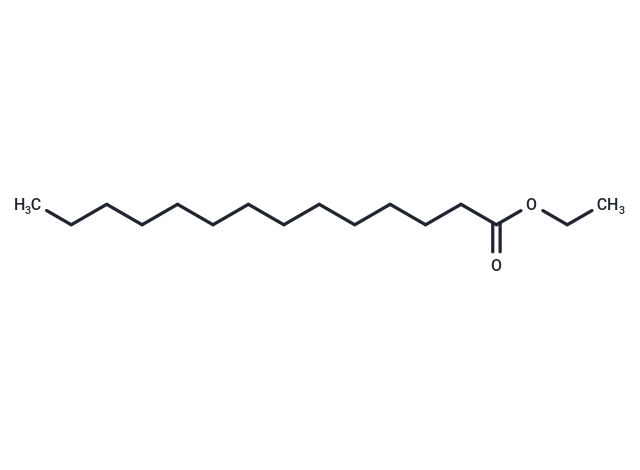
Ethyl Myristate
CAS No. 124-06-1
Ethyl Myristate( —— )
Catalog No. M37807 CAS No. 124-06-1
Ethyl Myristate (Ethyl tetradecanoate) is a compound that can be extracted from hops, has moisturizing properties and is commonly used in the skin care industry.
Purity : >98% (HPLC)
 COA
Datasheet
HNMR
HPLC
MSDS
Handing Instructions
COA
Datasheet
HNMR
HPLC
MSDS
Handing Instructions
| Size | Price / USD | Stock | Quantity |
| 50MG | 33 | In Stock |


|
| 100MG | 44 | In Stock |
|
| 200MG | Get Quote | In Stock |
|
| 500MG | 192 | In Stock |
|
| 1G | Get Quote | In Stock |
|
Biological Information
-
Product NameEthyl Myristate
-
NoteResearch use only, not for human use.
-
Brief DescriptionEthyl Myristate (Ethyl tetradecanoate) is a compound that can be extracted from hops, has moisturizing properties and is commonly used in the skin care industry.
-
DescriptionEthyl Myristate (Ethyl tetradecanoate) is a compound that can be extracted from hops, has moisturizing properties and is commonly used in the skin care industry.
-
In Vitro——
-
In Vivo——
-
Synonyms——
-
PathwayOthers
-
TargetOther Targets
-
RecptorOthers
-
Research Area——
-
Indication——
Chemical Information
-
CAS Number124-06-1
-
Formula Weight256.42
-
Molecular FormulaC16H32O2
-
Purity>98% (HPLC)
-
Solubility——
-
SMILESCCCCCCCCCCCCCC(=O)OCC
-
Chemical Name——
Shipping & Storage Information
-
Storage(-20℃)
-
ShippingWith Ice Pack
-
Stability≥ 2 years
Reference
molnova catalog



related products
-
Atracurium besylate
Atracurium besylate is a non-depolarizing neuromuscular blocking agent with short duration of action. Its lack of significant cardiovascular effects and its lack of dependence on good kidney function for elimination provide clinical advantage over alternate non-depolarizing neuromuscular blocking agents.
-
TT-012
TT-012 has anti-tumor activity, selectively binds dynamic MITF and disrupts the dimer formation and DNA binding of the latter.
-
Moiramide B
Moiramide B is a potent acetyl coenzyme A carboxylase (ACC) inhibitor (IC50:6 nM) with antimicrobial activity, strongly inhibiting Gram-positive bacteria but weakly inhibiting Gram-negative bacteria.
