


 Cart
Cart
 sales@molnova.com


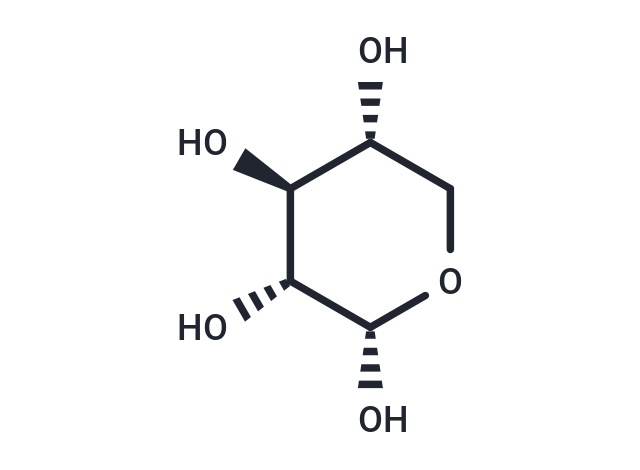
D-Xylose
CAS No. 6763-34-4
D-Xylose( —— )
Catalog No. M37790 CAS No. 6763-34-4
D-Xylose ((2S,3R,4S,5R)-oxane-2,3,4,5-tetrol) is a monosaccharide widely found in yeast and involved in the metabolism of the organism.
Purity : >98% (HPLC)
 COA
Datasheet
HNMR
HPLC
MSDS
Handing Instructions
COA
Datasheet
HNMR
HPLC
MSDS
Handing Instructions
| Size | Price / USD | Stock | Quantity |
| 2MG | 85 | In Stock |


|
| 5MG | 123 | In Stock |
|
| 10MG | 183 | In Stock |
|
| 25MG | 299 | In Stock |
|
| 50MG | 444 | In Stock |
|
| 100MG | 620 | In Stock |
|
| 200MG | Get Quote | In Stock |
|
| 500MG | 1332 | In Stock |
|
| 1G | Get Quote | In Stock |
|
Biological Information
-
Product NameD-Xylose
-
NoteResearch use only, not for human use.
-
Brief DescriptionD-Xylose ((2S,3R,4S,5R)-oxane-2,3,4,5-tetrol) is a monosaccharide widely found in yeast and involved in the metabolism of the organism.
-
DescriptionD-Xylose ((2S,3R,4S,5R)-oxane-2,3,4,5-tetrol) is a monosaccharide widely found in yeast and involved in the metabolism of the organism.
-
In Vitro——
-
In Vivo——
-
Synonyms——
-
PathwayOthers
-
TargetOther Targets
-
RecptorOthers
-
Research Area——
-
Indication——
Chemical Information
-
CAS Number6763-34-4
-
Formula Weight150.13
-
Molecular FormulaC5H10O5
-
Purity>98% (HPLC)
-
Solubility——
-
SMILESO[C@@H]1CO[C@H](O)[C@H](O)[C@H]1O
-
Chemical Name——
Shipping & Storage Information
-
Storage(-20℃)
-
ShippingWith Ice Pack
-
Stability≥ 2 years
Reference
molnova catalog



related products
-
X-Gluc cyclohexanami...
X-Gluc cyclohexanamine is a dye used to detect β-glucuronidase (GUS) activity and serves as a marker for gene expression, enabling the detection of target gene expression.
-
Berbamine dihydrochl...
Berbamine dihydrochloride, a natural compound derived from the Berberis amurensis plant, has been shown to exhibit antitumor activity in several Ys.
-
Physalin D
Physalin D shows antimalarial activity; it also exhibits a minimum inhibitory concentration value (MIC) against Mycobacterium tuberculosis H(37)Rv strain of 32 microg/mL.
