


 Cart
Cart
 sales@molnova.com


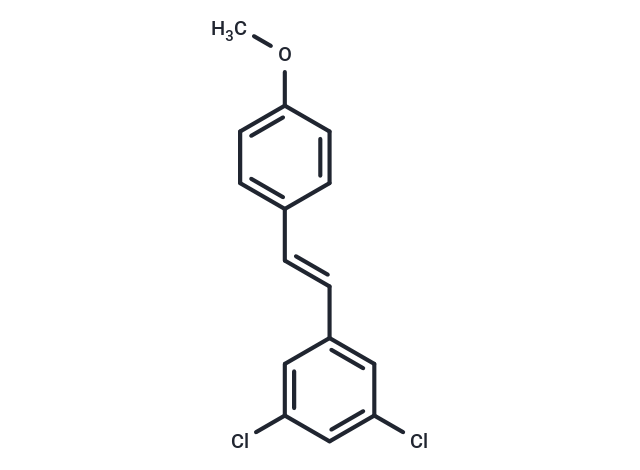
CAY10464
CAS No. 688348-37-0
CAY10464( —— )
Catalog No. M37540 CAS No. 688348-37-0
CAY10464 (AHR antagonist 7) is a potent AHR antagonist with potential antitumor activity that inhibits CYP1A1 mRNA expression and may be used to study cancer and metabolic diseases.
Purity : >98% (HPLC)
 COA
Datasheet
HNMR
HPLC
MSDS
Handing Instructions
COA
Datasheet
HNMR
HPLC
MSDS
Handing Instructions
| Size | Price / USD | Stock | Quantity |
| 5MG | 38 | In Stock |


|
| 10MG | 61 | In Stock |
|
| 25MG | 123 | In Stock |
|
| 50MG | 198 | In Stock |
|
| 100MG | 296 | In Stock |
|
| 200MG | Get Quote | In Stock |
|
| 500MG | 706 | In Stock |
|
| 1G | Get Quote | In Stock |
|
Biological Information
-
Product NameCAY10464
-
NoteResearch use only, not for human use.
-
Brief DescriptionCAY10464 (AHR antagonist 7) is a potent AHR antagonist with potential antitumor activity that inhibits CYP1A1 mRNA expression and may be used to study cancer and metabolic diseases.
-
DescriptionCAY10464 (AHR antagonist 7) is a potent AHR antagonist with potential antitumor activity that inhibits CYP1A1 mRNA expression and may be used to study cancer and metabolic diseases.
-
In Vitro——
-
In Vivo——
-
Synonyms——
-
PathwayEndocrinology/Hormones
-
TargetAhR
-
RecptorAhR
-
Research Area——
-
Indication——
Chemical Information
-
CAS Number688348-37-0
-
Formula Weight279.16
-
Molecular FormulaC15H12Cl2O
-
Purity>98% (HPLC)
-
Solubility——
-
SMILESC(=C/C1=CC(Cl)=CC(Cl)=C1)\C2=CC=C(OC)C=C2
-
Chemical Name——
Shipping & Storage Information
-
Storage(-20℃)
-
ShippingWith Ice Pack
-
Stability≥ 2 years
Reference
molnova catalog



related products
-
WAY-605471
WAY-605471 is a AHR antagonist with IC50 of 0.5 - 1 μM.
-
AHR Inhibitor I-103
AHR Inhibitor I-103 is an aryl hydrocarbon receptor (AHR) inhibitor with anticancer activity used in the study of breast cancer and acute myeloid leukemia.
-
3-Methylindole
Skatole is produced by intestinal bacteria regulates intestinal epithelial cellular functions through activating aryl hydrocarbon receptors and p38.
