


 Cart
Cart
 sales@molnova.com


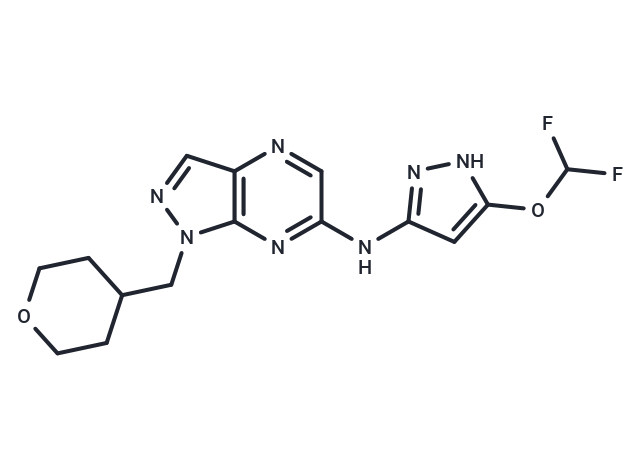
BLU-222
CAS No. 2888704-84-3
BLU-222( —— )
Catalog No. M37524 CAS No. 2888704-84-3
BLU-222 is an orally available but selective cell cycle protein-dependent kinase (CDK2) inhibitor with antitumor activity for the study of ovarian and uterine cancer.
Purity : >98% (HPLC)
 COA
Datasheet
HNMR
HPLC
MSDS
Handing Instructions
COA
Datasheet
HNMR
HPLC
MSDS
Handing Instructions
| Size | Price / USD | Stock | Quantity |
| 1 mL x 10 mM in DMSO | 319 | In Stock |


|
| 5MG | 282 | In Stock |
|
| 10MG | 503 | In Stock |
|
| 25MG | 937 | In Stock |
|
| 50MG | 1237 | In Stock |
|
| 100MG | 1665 | In Stock |
|
| 200MG | Get Quote | In Stock |
|
| 500MG | Get Quote | In Stock |
|
| 1G | Get Quote | In Stock |
|
Biological Information
-
Product NameBLU-222
-
NoteResearch use only, not for human use.
-
Brief DescriptionBLU-222 is an orally available but selective cell cycle protein-dependent kinase (CDK2) inhibitor with antitumor activity for the study of ovarian and uterine cancer.
-
DescriptionBLU-222 is an orally available but selective cell cycle protein-dependent kinase (CDK2) inhibitor with antitumor activity for the study of ovarian and uterine cancer.
-
In Vitro——
-
In Vivo——
-
Synonyms——
-
PathwayCell Cycle/DNA Damage
-
TargetCDK
-
RecptorCDK
-
Research Area——
-
Indication——
Chemical Information
-
CAS Number2888704-84-3
-
Formula Weight365.34
-
Molecular FormulaC15H17F2N7O2
-
Purity>98% (HPLC)
-
Solubility——
-
SMILESFC(F)OC1=CC(=NN1)NC2=NC3=C(N=C2)C=NN3CC4CCOCC4
-
Chemical Name——
Shipping & Storage Information
-
Storage(-20℃)
-
ShippingWith Ice Pack
-
Stability≥ 2 years
Reference
molnova catalog



related products
-
CDK4/6/1 Inhibitor
CDK4/6/1 Inhibitor (Crozbaciclib) is a type of CDK4/6 inhibitor (IC50s: 3 and 1 nM).
-
Flavopiridol hydroch...
A potent, ATP-competetive CDKs inhibitor with IC50 of 30, 170, 100 nM for CDk1, 2, 4, respectively.
-
Cdk2 Inhibitor II
Cdk2 Inhibitor II is a selective and potent CDK2 inhibitor50 at 60 nM.
