


 Cart
Cart
 sales@molnova.com


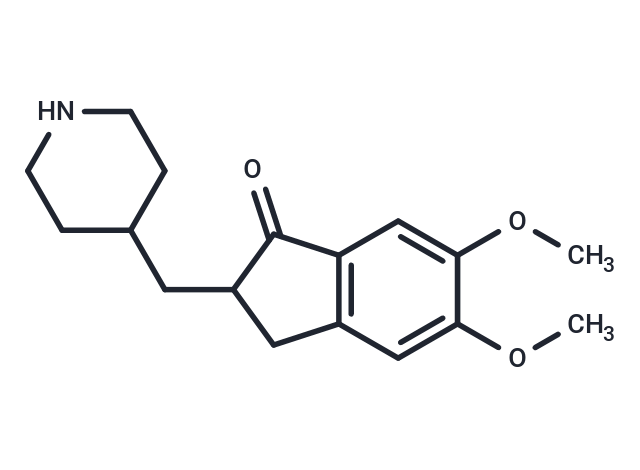
ACHE-IN-38
CAS No. 120014-30-4
ACHE-IN-38( —— )
Catalog No. M37278 CAS No. 120014-30-4
ACHE-IN-38 is a potent Acetylcholinesterase inhibitor that can be used for the synthesis of compounds with anti-inflammatory, anti-tumor, and antibacterial activities.
Purity : >98% (HPLC)
 COA
Datasheet
HNMR
HPLC
MSDS
Handing Instructions
COA
Datasheet
HNMR
HPLC
MSDS
Handing Instructions
| Size | Price / USD | Stock | Quantity |
| 10MG | 29 | In Stock |


|
| 25MG | 60 | In Stock |
|
| 50MG | 91 | In Stock |
|
| 100MG | 152 | In Stock |
|
| 200MG | Get Quote | In Stock |
|
| 500MG | 369 | In Stock |
|
| 1G | Get Quote | In Stock |
|
Biological Information
-
Product NameACHE-IN-38
-
NoteResearch use only, not for human use.
-
Brief DescriptionACHE-IN-38 is a potent Acetylcholinesterase inhibitor that can be used for the synthesis of compounds with anti-inflammatory, anti-tumor, and antibacterial activities.
-
DescriptionACHE-IN-38 is a potent Acetylcholinesterase inhibitor that can be used for the synthesis of compounds with anti-inflammatory, anti-tumor, and antibacterial activities.
-
In Vitro——
-
In Vivo——
-
Synonyms——
-
PathwayMicrobiology/Virology
-
TargetAntifungal
-
RecptorAntifungal
-
Research Area——
-
Indication——
Chemical Information
-
CAS Number120014-30-4
-
Formula Weight289.37
-
Molecular FormulaC17H23NO3
-
Purity>98% (HPLC)
-
Solubility——
-
SMILESCOc1cc2CC(CC3CCNCC3)C(=O)c2cc1OC
-
Chemical Name——
Shipping & Storage Information
-
Storage(-20℃)
-
ShippingWith Ice Pack
-
Stability≥ 2 years
Reference
molnova catalog



related products
-
Antifungal agent 76
Antifungal agent 76 has broad-spectrum antifungal activity with a MIC value of 0.25-16 μg/mL.Antifungal agent 76 may act by disrupting fungal cell membranes and can be used to study fungal infections.
-
Biapenem
Biapenem is a 1-beta-methylcarbapenem antibiotic with a wide range of antibacterial activity.
-
Cinobufagin
Cinobufagin is a selective Na+/K+-ATPase inhibitor. The activity of Cinobufagin is same as ouabain.
