


 Cart
Cart
 sales@molnova.com


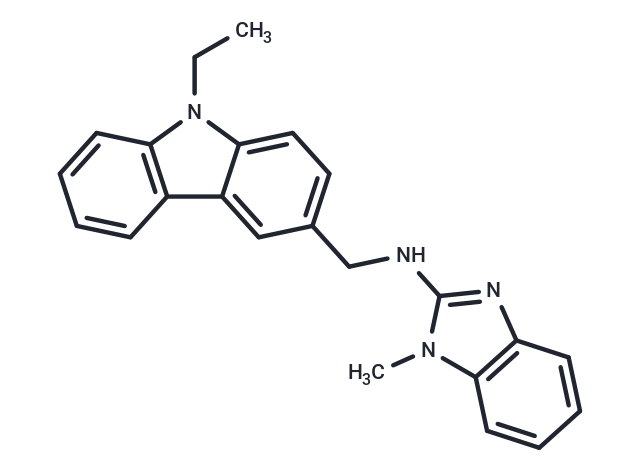
AJ2-30
CAS No. 2700322-79-6
AJ2-30( —— )
Catalog No. M37014 CAS No. 2700322-79-6
AJ2-30 is an SLCl5A4 inhibitor that inhibits TLR9-mediated B cell activation and inhibits MDP transporter.
Purity : >98% (HPLC)
 COA
Datasheet
HNMR
HPLC
MSDS
Handing Instructions
COA
Datasheet
HNMR
HPLC
MSDS
Handing Instructions
| Size | Price / USD | Stock | Quantity |
| 1 mL x 10 mM in DMSO | 117 | In Stock |


|
| 5MG | 103 | In Stock |
|
| 10MG | 170 | In Stock |
|
| 25MG | 353 | In Stock |
|
| 50MG | 554 | In Stock |
|
| 100MG | 788 | In Stock |
|
| 200MG | 1051 | In Stock |
|
| 500MG | Get Quote | In Stock |
|
| 1G | Get Quote | In Stock |
|
Biological Information
-
Product NameAJ2-30
-
NoteResearch use only, not for human use.
-
Brief DescriptionAJ2-30 is an SLCl5A4 inhibitor that inhibits TLR9-mediated B cell activation and inhibits MDP transporter.
-
DescriptionAJ2-30 is a SLCl5A4 inhibitor. AJ2-30 inhibits TLR9-mediated B cell activation. AJ2-30 block endogenous NOD signaling in human and mouse macrophages. AJ2-30 can be used for research of inflammation.
-
In Vitro——
-
In Vivo——
-
Synonyms——
-
PathwayOthers
-
TargetOther Targets
-
RecptorOthers
-
Research Area——
-
Indication——
Chemical Information
-
CAS Number2700322-79-6
-
Formula Weight354.45
-
Molecular FormulaC23H22N4
-
Purity>98% (HPLC)
-
SolubilityIn Vitro:?DMSO : 50 mg/mL (141.06 mM; Ultrasonic (<60°C)
-
SMILESN=1C=2C=CC=CC2N(C1NCC3=CC=C4C(=C3)C=5C=CC=CC5N4CC)C
-
Chemical Name——
Shipping & Storage Information
-
Storage(-20℃)
-
ShippingWith Ice Pack
-
Stability≥ 2 years
Reference
1. Daniel Lazar, et al. Small molecule inhibitors of scl15a4 with anti-inflammatory activity. Patent. WO2021174023.
molnova catalog



related products
-
1,5-Anhydrosorbitol
1,5-Anhydrosorbitol is a validated marker of short-term glycemic control. This substance is derived mainly from food.
-
Carbobenzoxyproline
Carbobenzoxyproline is a prolidase inhibitor.
-
Spiraeoside
Spiraeoside (Standard) is the analytical standard of Spiraeoside. This product is intended for research and analytical applications. Spiraeoside, an orally active natural compound, exerts antioxidant activity, inhibits reactive oxygen species (ROS) and malondialdehyde production. Spiraeoside possesses antiallergic, anti-inflammatory and antitumor activities.
