


 Cart
Cart
 sales@molnova.com


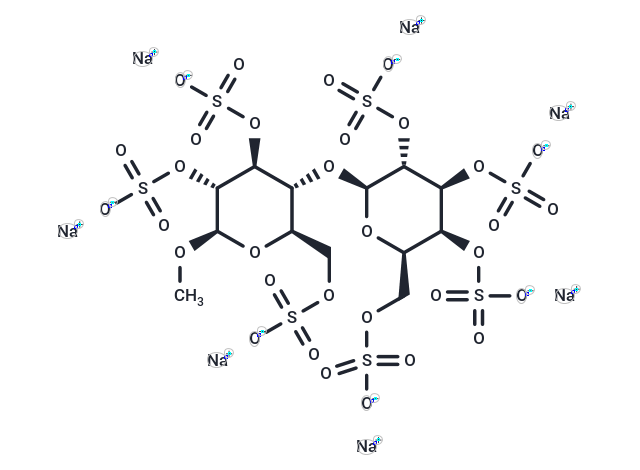
STC314
CAS No. 186295-19-2
STC314( —— )
Catalog No. M36601 CAS No. 186295-19-2
STC314 is an anti-infective agent that reverses organ damage caused by excessive immune response by neutralizing extracellular histones and neutrophil trapping networks, and can be used in the study of sepsis and acute respiratory distress syndrome (ARDS).
Purity : >98% (HPLC)
 COA
Datasheet
HNMR
HPLC
MSDS
Handing Instructions
COA
Datasheet
HNMR
HPLC
MSDS
Handing Instructions
| Size | Price / USD | Stock | Quantity |
| 5MG | 2831 | In Stock |


|
| 25MG | 7410 | In Stock |
|
| 100MG | Get Quote | In Stock |
|
| 200MG | Get Quote | In Stock |
|
| 500MG | Get Quote | In Stock |
|
| 1G | Get Quote | In Stock |
|
Biological Information
-
Product NameSTC314
-
NoteResearch use only, not for human use.
-
Brief DescriptionSTC314 is an anti-infective agent that reverses organ damage caused by excessive immune response by neutralizing extracellular histones and neutrophil trapping networks, and can be used in the study of sepsis and acute respiratory distress syndrome (ARDS).
-
DescriptionSTC314 is a small polyanion that interact electrostatically with histones. STC314 blocks disruption of lipid-bilayers by histones that inhibits the cytotoxic, platelet-activating and erythrocyte-damaging effects of histones. STC314 has anti-infective effects and can be uesd for sepsis research.
-
In Vitro——
-
In Vivo——
-
Synonyms——
-
PathwayOthers
-
TargetOther Targets
-
RecptorOthers
-
Research Area——
-
Indication——
Chemical Information
-
CAS Number186295-19-2
-
Formula Weight1070.64
-
Molecular FormulaC13H17Na7O32S7
-
Purity>98% (HPLC)
-
Solubility——
-
SMILESO=S(O[C@H]([C@H]([C@@H](O[C@@H]1COS(=O)([O-])=O)OC)OS(=O)([O-])=O)[C@@H]1O[C@H]2[C@@H]([C@H]([C@H]([C@H](O2)COS(=O)([O-])=O)OS(=O)([O-])=O)OS(=O)([O-])=O)OS(=O)([O-])=O)([O-])=O.[Na+].[Na+].[Na+].[Na+].[Na+].[Na+].[Na+]
-
Chemical Name——
Shipping & Storage Information
-
Storage(-20℃)
-
ShippingWith Ice Pack
-
Stability≥ 2 years
Reference
1. Connor H O' Meara, et al. Neutralizing the pathological effects of extracellular histones with small polyanions. Nat Commun. 2020 Dec 16;11(1):6408. ?
molnova catalog



related products
-
Hosenkoside B
Hosenkoside B is a natural product from Impatiens balsamina L.
-
Nudifloric Acid
Nudifloric Acid is from Cordyceps bassiana. Nudifloric Acid targets to block AP-1-mediated luciferase activity implying it has an anti-inflammatory function.
-
Hydroxyobtusifolin
OAT1/3-IN-1 (compound 7) is a dual inhibitor of OAT1 and OAT3. OAT1/3-IN-1 can reverse the toxicity of Cys-Hg on HEK-OAT1 cells (10 μM) and has a potential protective effect on the kidneys. OAT1/3-IN-1 can be used to study mercury-induced kidney damage.
