


 Cart
Cart
 sales@molnova.com


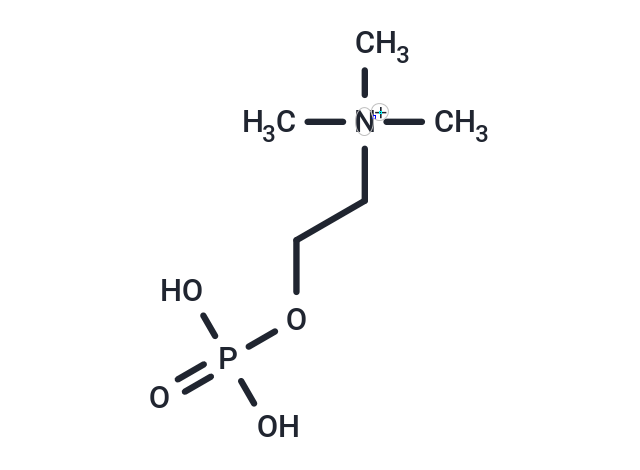
Phosphorylcholine B
CAS No. 3616-04-4
Phosphorylcholine B( —— )
Catalog No. M36557 CAS No. 3616-04-4
Phosphorylcholine is widely present in the biological world, which is a phospholipid present in the eukaryotic biofilm, and also in the symbiotic bacteria or pathogens associated with eukaryotes.
Purity : >98% (HPLC)
 COA
Datasheet
HNMR
HPLC
MSDS
Handing Instructions
COA
Datasheet
HNMR
HPLC
MSDS
Handing Instructions
| Size | Price / USD | Stock | Quantity |
| 10MG | 28 | In Stock |


|
| 100MG | Get Quote | In Stock |
|
| 200MG | Get Quote | In Stock |
|
| 500MG | Get Quote | In Stock |
|
| 1G | Get Quote | In Stock |
|
Biological Information
-
Product NamePhosphorylcholine B
-
NoteResearch use only, not for human use.
-
Brief DescriptionPhosphorylcholine is widely present in the biological world, which is a phospholipid present in the eukaryotic biofilm, and also in the symbiotic bacteria or pathogens associated with eukaryotes.
-
DescriptionPhosphatidylcholine is the main phospholipid component in eukaryotic biofilms. Phosphatidylcholine exists in commensal or pathogenic bacteria associated with eukaryotes in prokaryotes. Phosphorylcholine exhibits a surprising range of immunomodulatory properties.
-
In Vitro——
-
In Vivo——
-
Synonyms——
-
PathwayProteasome/Ubiquitin
-
TargetEndogenous Metabolite
-
RecptorEndogenous Metabolite
-
Research Area——
-
Indication——
Chemical Information
-
CAS Number3616-04-4
-
Formula Weight184.15
-
Molecular FormulaC5H15NO4P
-
Purity>98% (HPLC)
-
SolubilityIn Vitro:?H2O : 100 mg/mL (546.03 mM; Ultrasonic) Ethanol : 4 mg/mL (21.84 mM; Ultrasonic) DMSO : 1 mg/mL (5.46 mM; Ultrasonic (<80°C); )
-
SMILESO=P(O)(O)OCC[N+](C)(C)C
-
Chemical Name——
Shipping & Storage Information
-
Storage(-20℃)
-
ShippingWith Ice Pack
-
Stability≥ 2 years
Reference
1. Harnett W, et al. Phosphorylcholine: friend or foe of the immune system? Immunol Today. 1999 Mar;20(3):125-9.?
molnova catalog



related products
-
4-ACETAMIDOBUTYRIC A...
4-Acetamidobutanoic acid can be found in blood feces and urine as well as in human prostate tissue. 4-Acetamidobutanoic acid exists in all eukaryotes ranging from yeast to humans.
-
Lipoxin A4
Lipoxin A4 (LXA4) is a lipoxygenase-derived arachidonate-like mediator with anti-inflammatory properties.Lipoxin A4 attenuates MSU crystal-induced NLRP3 inflammasome activation through inhibition of Nrf2, and regulates M1/M2 macrophage polarization through the FPR2-IRF pathway.
-
7-Dehydrocholesterol
7-Dehydrocholesterol down-regulates cholesterol biosynthesis in cultured Smith-Lemi-Opitz syndrome skin fibroblasts.
