


 Cart
Cart
 sales@molnova.com


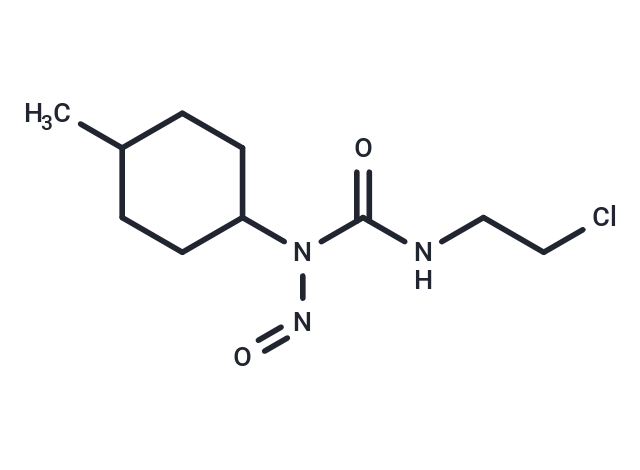
N′-(2-Chloroethyl)-N-(4-methylcyclohexyl)-N-nitrosourea
CAS No. 75219-93-1
N′-(2-Chloroethyl)-N-(4-methylcyclohexyl)-N-nitrosourea( —— )
Catalog No. M36553 CAS No. 75219-93-1
N′-(2-Chloroethyl)-N-(4-methylcyclohexyl)-N-nitrosourea has antitumor activity and is used in the treatment of Lewis lung and colon tumors.
Purity : >98% (HPLC)
 COA
Datasheet
HNMR
HPLC
MSDS
Handing Instructions
COA
Datasheet
HNMR
HPLC
MSDS
Handing Instructions
| Size | Price / USD | Stock | Quantity |
| 5MG | 172 | In Stock |


|
| 10MG | 254 | In Stock |
|
| 25MG | 392 | In Stock |
|
| 50MG | 551 | In Stock |
|
| 100MG | 762 | In Stock |
|
| 200MG | 1014 | In Stock |
|
| 500MG | Get Quote | In Stock |
|
| 1G | Get Quote | In Stock |
|
Biological Information
-
Product NameN′-(2-Chloroethyl)-N-(4-methylcyclohexyl)-N-nitrosourea
-
NoteResearch use only, not for human use.
-
Brief DescriptionN′-(2-Chloroethyl)-N-(4-methylcyclohexyl)-N-nitrosourea has antitumor activity and is used in the treatment of Lewis lung and colon tumors.
-
DescriptionN′-(2-Chloroethyl)-N-(4-methylcyclohexyl)-N-nitrosourea has antitumor activity and is used in the treatment of Lewis lung and colon tumors.
-
In Vitro——
-
In Vivo——
-
Synonyms——
-
PathwayOthers
-
TargetOther Targets
-
RecptorOthers
-
Research Area——
-
Indication——
Chemical Information
-
CAS Number75219-93-1
-
Formula Weight247.72
-
Molecular FormulaC10H18ClN3O2
-
Purity>98% (HPLC)
-
Solubility——
-
SMILESCC1CCC(N(N=O)C(NCCCl)=O)CC1
-
Chemical Name——
Shipping & Storage Information
-
Storage(-20℃)
-
ShippingWith Ice Pack
-
Stability≥ 2 years
Reference
molnova catalog



related products
-
p-Tolylmaleimide
p-Tolylmaleimide is an inhibitor of the water channel and binds to Aquaporin Z.
-
Emicizumab
Emicizumab(ACE 910) is a bispecific monoclonal antibody that bridges activated factor IX and activated factor X to mimic the function of activated factor VIII. Emicizumab is used for the prevention and treatment of hemophilia A.
-
Tanshinol B
Tanshinol B is a bioactive component of Salvia miltiorrhiza, which can be isolated from the 50% ethanol extract of the roots and rhizomes of Seaweed prowazekii.
