


 Cart
Cart
 sales@molnova.com


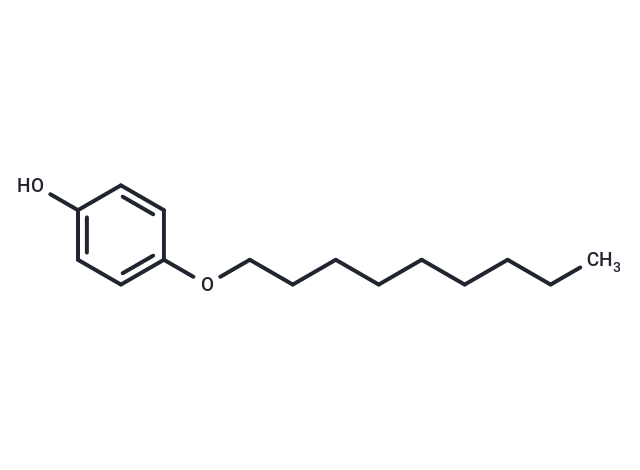
4-N-Nonyloxyphenol
CAS No. 53646-83-6
4-N-Nonyloxyphenol( —— )
Catalog No. M36415 CAS No. 53646-83-6
4-N-Nonyloxyphenol (4-nonoxyphenol), a heterogeneous photosensitizer based on kaolinite nanotubes, is a widely used pesticide and endocrine disruptor for the photodegradation of phenol-based pesticides.
Purity : >98% (HPLC)
 COA
Datasheet
HNMR
HPLC
MSDS
Handing Instructions
COA
Datasheet
HNMR
HPLC
MSDS
Handing Instructions
| Size | Price / USD | Stock | Quantity |
| 5MG | 100 | In Stock |


|
| 10MG | 135 | In Stock |
|
| 25MG | 231 | In Stock |
|
| 50MG | 324 | In Stock |
|
| 100MG | 461 | In Stock |
|
| 200MG | 669 | In Stock |
|
| 500MG | Get Quote | In Stock |
|
| 1G | Get Quote | In Stock |
|
Biological Information
-
Product Name4-N-Nonyloxyphenol
-
NoteResearch use only, not for human use.
-
Brief Description4-N-Nonyloxyphenol (4-nonoxyphenol), a heterogeneous photosensitizer based on kaolinite nanotubes, is a widely used pesticide and endocrine disruptor for the photodegradation of phenol-based pesticides.
-
Description4-N-Nonyloxyphenol (4-nonoxyphenol), a heterogeneous photosensitizer based on kaolinite nanotubes, is a widely used pesticide and endocrine disruptor for the photodegradation of phenol-based pesticides.
-
In Vitro——
-
In Vivo——
-
Synonyms——
-
PathwayOthers
-
TargetOther Targets
-
RecptorOthers
-
Research Area——
-
Indication——
Chemical Information
-
CAS Number53646-83-6
-
Formula Weight236.35
-
Molecular FormulaC15H24O2
-
Purity>98% (HPLC)
-
Solubility——
-
SMILESO(CCCCCCCCC)C1=CC=C(O)C=C1
-
Chemical Name——
Shipping & Storage Information
-
Storage(-20℃)
-
ShippingWith Ice Pack
-
Stability≥ 2 years
Reference
molnova catalog



related products
-
Cortistatin-14 TFA (...
Cortistatin-14 is a neuropeptide have structural similarity to somatostatin-14. It is produced in the cortex and hippocampus of central nervous system.
-
DABCYL-Arg-Gly-Val-V...
DABCYL-Arg-Gly-Val-Val-Asn-Ala-OH
-
Bis(3-aminopropyl)am...
Bis(3-aminopropyl)amine is a structural homologue of the natural polyamine spermidine with antitumor activity that may make it useful as a antineoplastic agent.
