


 Cart
Cart
 sales@molnova.com


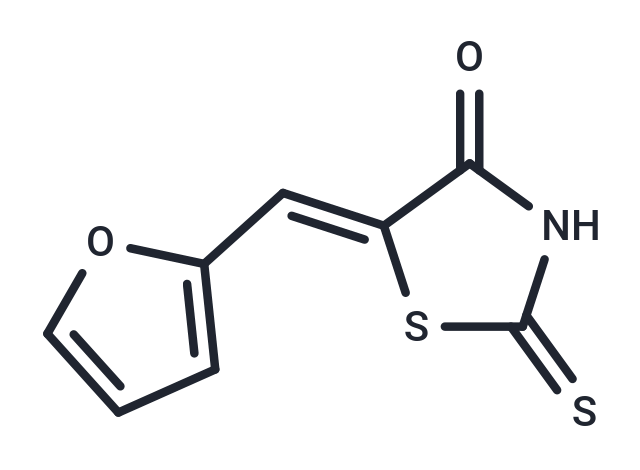
Protonstatin-1
CAS No. 521972-99-6
Protonstatin-1( —— )
Catalog No. M36384 CAS No. 521972-99-6
Protonstatin-1 is used as a hypoglycemic agent and as a compound for the treatment of Alzheimer's disease, inhibits IGFIR kinase activity and can be used in cancer research.
Purity : >98% (HPLC)
 COA
Datasheet
HNMR
HPLC
MSDS
Handing Instructions
COA
Datasheet
HNMR
HPLC
MSDS
Handing Instructions
| Size | Price / USD | Stock | Quantity |
| 1 mL x 10 mM in DMSO | 250 | In Stock |


|
| 5MG | 227 | In Stock |
|
| 10MG | 330 | In Stock |
|
| 25MG | 566 | In Stock |
|
| 50MG | 737 | In Stock |
|
| 100MG | 1014 | In Stock |
|
| 200MG | 1376 | In Stock |
|
| 500MG | Get Quote | In Stock |
|
| 1G | Get Quote | In Stock |
|
Biological Information
-
Product NameProtonstatin-1
-
NoteResearch use only, not for human use.
-
Brief DescriptionProtonstatin-1 is used as a hypoglycemic agent and as a compound for the treatment of Alzheimer's disease, inhibits IGFIR kinase activity and can be used in cancer research.
-
DescriptionProtonstatin-1 is used as a hypoglycemic agent and as a compound for the treatment of Alzheimer's disease, inhibits IGFIR kinase activity and can be used in cancer research.
-
In Vitro——
-
In Vivo——
-
Synonyms——
-
PathwayAngiogenesis
-
TargetIGF-1R
-
RecptorIGF-1R
-
Research Area——
-
Indication——
Chemical Information
-
CAS Number521972-99-6
-
Formula Weight211.26
-
Molecular FormulaC8H5NO2S2
-
Purity>98% (HPLC)
-
Solubility——
-
SMILESO=C1NC(=S)S\C1=C/C1=CC=CO1
-
Chemical Name——
Shipping & Storage Information
-
Storage(-20℃)
-
ShippingWith Ice Pack
-
Stability≥ 2 years
Reference
molnova catalog



related products
-
PQ401
PQ401 inhibits autophosphorylation of IGF-1R domain with IC50 of <1 μM.
-
NVP-ADW742 b
NVP-ADW742 is an IGF-1R inhibitor with IC50 of 0.17 μM >16-fold more potent against IGF-1R than InsR; little activity to HER2 PDGFR VEGFR-2 Bcr-Abl and c-Kit.
-
BMS-754807
BMS-754807 (BMS 754807, BMS754807)?is a potent, reversible, orally active inhibitor of IGF-1R/Insulin receptor with IC50 of 1.8 and 1.7 nM, respectively.
