


 Cart
Cart
 sales@molnova.com


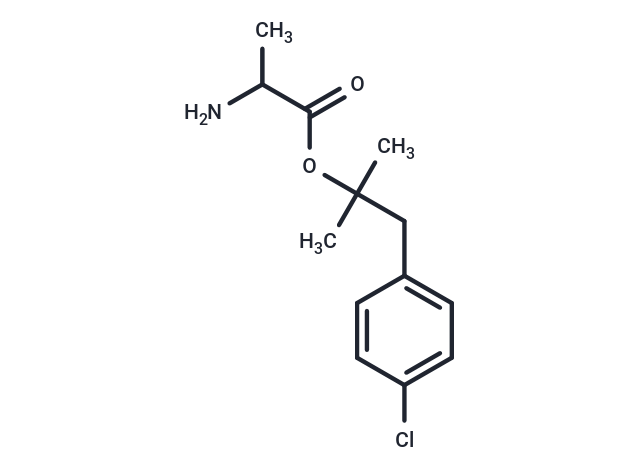
Alaproclate
CAS No. 60719-82-6
Alaproclate( —— )
Catalog No. M36270 CAS No. 60719-82-6
Alaproclate is a non-competitive NMDA receptor antagonist and a new selective 5-HT uptake inhibitor for the study of depression and dementia.
Purity : >98% (HPLC)
 COA
Datasheet
HNMR
HPLC
MSDS
Handing Instructions
COA
Datasheet
HNMR
HPLC
MSDS
Handing Instructions
| Size | Price / USD | Stock | Quantity |
| 5MG | 686 | In Stock |


|
| 10MG | 938 | In Stock |
|
| 25MG | 1444 | In Stock |
|
| 50MG | 1841 | In Stock |
|
| 100MG | Get Quote | In Stock |
|
| 200MG | Get Quote | In Stock |
|
| 500MG | Get Quote | In Stock |
|
| 1G | Get Quote | In Stock |
|
Biological Information
-
Product NameAlaproclate
-
NoteResearch use only, not for human use.
-
Brief DescriptionAlaproclate is a non-competitive NMDA receptor antagonist and a new selective 5-HT uptake inhibitor for the study of depression and dementia.
-
DescriptionAlaproclate is a non-competitive NMDA receptor antagonist and a new selective 5-HT uptake inhibitor for the study of depression and dementia.
-
In Vitro——
-
In Vivo——
-
Synonyms——
-
PathwayMembrane Transporter/Ion Channel
-
TargetNMDAR
-
RecptorNMDAR
-
Research Area——
-
Indication——
Chemical Information
-
CAS Number60719-82-6
-
Formula Weight255.74
-
Molecular FormulaC13H18ClNO2
-
Purity>98% (HPLC)
-
Solubility——
-
SMILESO=C(OC(C)(C)CC1=CC=C(Cl)C=C1)C(N)C
-
Chemical Name——
Shipping & Storage Information
-
Storage(-20℃)
-
ShippingWith Ice Pack
-
Stability≥ 2 years
Reference
molnova catalog



related products
-
GNE-8324
GNE-8324 is a GluN2A selective positive allosteric modulator that selectively enhances NMDAR-mediated synaptic responses in inhibitory, but not excitatory, neurons.
-
Procyclidine hydroch...
Procyclidine is a potent anticholinergic agent and also have NMDA antagonist properties.
-
L-Cysteine S-sulfate
L-Cysteine S-sulfate (S-Sulfo-L-cysteine) is an effective N-methyl-d-aspartate (NMDA) glutamatergic receptors agonist. L-Cysteine S-sulfate is the substrate for cystine lyase .
