


 Cart
Cart
 sales@molnova.com


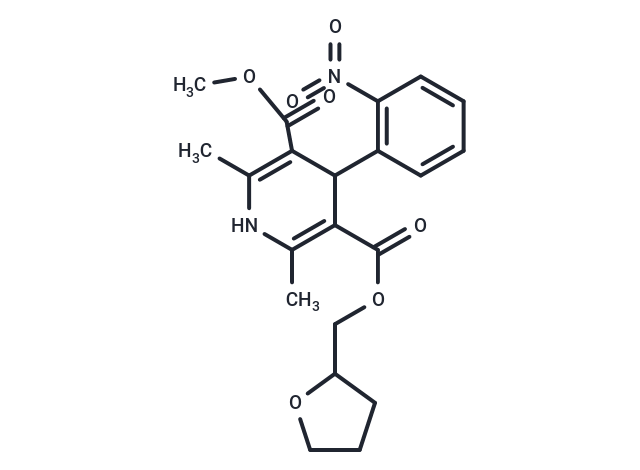
Furnidipine
CAS No. 138661-03-7
Furnidipine( —— )
Catalog No. M36174 CAS No. 138661-03-7
Furnidipine significantly reduced AoD and AF and had antiarrhythmic and cardioprotective effects at low doses in a rat model.
Purity : >98% (HPLC)
 COA
Datasheet
HNMR
HPLC
MSDS
Handing Instructions
COA
Datasheet
HNMR
HPLC
MSDS
Handing Instructions
| Size | Price / USD | Stock | Quantity |
| 5MG | 148 | In Stock |


|
| 10MG | 221 | In Stock |
|
| 25MG | 372 | In Stock |
|
| 50MG | 542 | In Stock |
|
| 100MG | 775 | In Stock |
|
| 200MG | 1070 | In Stock |
|
| 500MG | Get Quote | In Stock |
|
| 1G | Get Quote | In Stock |
|
Biological Information
-
Product NameFurnidipine
-
NoteResearch use only, not for human use.
-
Brief DescriptionFurnidipine significantly reduced AoD and AF and had antiarrhythmic and cardioprotective effects at low doses in a rat model.
-
DescriptionFurnidipine significantly reduced AoD and AF and had antiarrhythmic and cardioprotective effects at low doses in a rat model.
-
In Vitro——
-
In Vivo——
-
Synonyms——
-
PathwayOthers
-
TargetOther Targets
-
RecptorOthers
-
Research Area——
-
Indication——
Chemical Information
-
CAS Number138661-03-7
-
Formula Weight416.42
-
Molecular FormulaC21H24N2O7
-
Purity>98% (HPLC)
-
Solubility——
-
SMILESC(OCC1CCCO1)(=O)C=2C(C(C(OC)=O)=C(C)NC2C)C3=C(N(=O)=O)C=CC=C3
-
Chemical Name——
Shipping & Storage Information
-
Storage(-20℃)
-
ShippingWith Ice Pack
-
Stability≥ 2 years
Reference
molnova catalog



related products
-
(Des-Thr7)-Glucagon
(Des-Thr7)-Glucagon
-
Cauloside D
Cauloside D, a triterpene glycoside isolated from Caulophyllum robustum Max, inhibits the expression of iNOS and proinflammatory cytokines with anti-inflammatory effects.
-
Carbendazim
Carbendazim is a broad-spectrum benzimidazole antifungal with potential antimitotic and antineoplastic activities.
