


 Cart
Cart
 sales@molnova.com


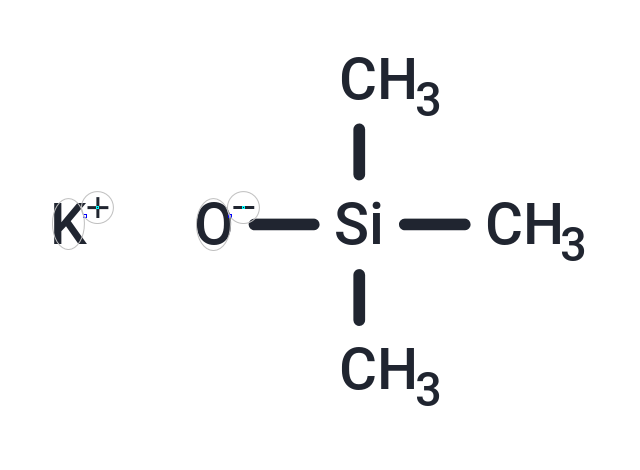
Potassium trimethylsilanolate
CAS No. 10519-96-7
Potassium trimethylsilanolate( —— )
Catalog No. M35943 CAS No. 10519-96-7
Potassium trimethylsilanolate is a catalyst. Potassium trimethylsilanolate promotes the Suzuki-Miyaura reaction by (TMSOK) proceeds through the boronate pathway.
Purity : >98% (HPLC)
 COA
Datasheet
HNMR
HPLC
MSDS
Handing Instructions
COA
Datasheet
HNMR
HPLC
MSDS
Handing Instructions
| Size | Price / USD | Stock | Quantity |
| 1 mL x 10 mM in DMSO | 28 | In Stock |


|
| 10MG | 29 | In Stock |
|
| 25MG | 51 | In Stock |
|
| 50MG | 75 | In Stock |
|
| 100MG | 112 | In Stock |
|
| 200MG | Get Quote | In Stock |
|
| 500MG | 276 | In Stock |
|
| 1G | Get Quote | In Stock |
|
Biological Information
-
Product NamePotassium trimethylsilanolate
-
NoteResearch use only, not for human use.
-
Brief DescriptionPotassium trimethylsilanolate is a catalyst. Potassium trimethylsilanolate promotes the Suzuki-Miyaura reaction by (TMSOK) proceeds through the boronate pathway.
-
DescriptionPotassium trimethylsilanolate is a catalyst. Potassium trimethylsilanolate promotes the Suzuki-Miyaura reaction by (TMSOK) proceeds through the boronate pathway.
-
In Vitro——
-
In Vivo——
-
Synonyms——
-
PathwayOthers
-
TargetOther Targets
-
RecptorOthers
-
Research Area——
-
Indication——
Chemical Information
-
CAS Number10519-96-7
-
Formula Weight128.29
-
Molecular FormulaC3H9KOSi
-
Purity>98% (HPLC)
-
Solubility——
-
SMILESC[Si](C)([O-])C.[K+]
-
Chemical Name——
Shipping & Storage Information
-
Storage(-20℃)
-
ShippingWith Ice Pack
-
Stability≥ 2 years
Reference
molnova catalog



related products
-
Locustachykinin II
Locustachykinin II
-
Uridine 5′-triphosph...
Uridine 5'-triphosphate tris salt is an agonist to the P2Y receptor and has been used to study concentrations of intracellular Ca2+ as well as a phosphate donor for in vitro kinase assays.
-
GNF4877
GNF4877 is a potent DYRK1A and GSK3β inhibitor (IC50s: 6?nM and 16?nM).
