


 Cart
Cart
 sales@molnova.com


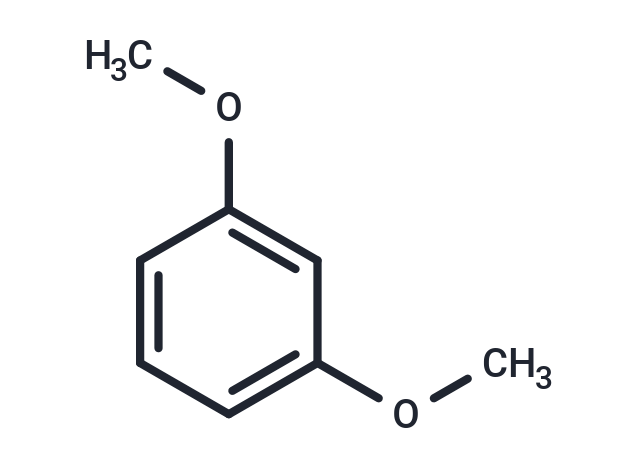
1,3-Dimethoxybenzene
CAS No. 151-10-0
1,3-Dimethoxybenzene( —— )
Catalog No. M35900 CAS No. 151-10-0
1,3-Dimethoxybenzene (Resorcinol dimethyl ether) is a dimethoxybenzene analog from German hazelnuts that is an intermediate in the synthesis of other compounds.
Purity : >98% (HPLC)
 COA
Datasheet
HNMR
HPLC
MSDS
Handing Instructions
COA
Datasheet
HNMR
HPLC
MSDS
Handing Instructions
| Size | Price / USD | Stock | Quantity |
| 1 mL x 10 mM in DMSO | 28 | In Stock |


|
| 100MG | Get Quote | In Stock |
|
| 200MG | Get Quote | In Stock |
|
| 500MG | Get Quote | In Stock |
|
| 1G | 27 | In Stock |
|
Biological Information
-
Product Name1,3-Dimethoxybenzene
-
NoteResearch use only, not for human use.
-
Brief Description1,3-Dimethoxybenzene (Resorcinol dimethyl ether) is a dimethoxybenzene analog from German hazelnuts that is an intermediate in the synthesis of other compounds.
-
Description1,3-Dimethoxybenzene belongs to the class of organic compounds known as dimethoxybenzenes. 1,3-Dimethoxybenzene is an intermediate in synthesis of organic compounds.
-
In Vitro——
-
In Vivo——
-
Synonyms——
-
PathwayOthers
-
TargetOther Targets
-
RecptorOthers
-
Research Area——
-
Indication——
Chemical Information
-
CAS Number151-10-0
-
Formula Weight138.16
-
Molecular FormulaC8H10O2
-
Purity>98% (HPLC)
-
Solubility——
-
SMILESCOC1=CC(OC)=CC=C1
-
Chemical Name——
Shipping & Storage Information
-
Storage(-20℃)
-
ShippingWith Ice Pack
-
Stability≥ 2 years
Reference
1. Gregory Michael Shutske, et al. Process for the preparation of 2-chloro-1,3-dimethoxybenzene. EP0067342A1
molnova catalog



related products
-
Regaloside D
Regaloside D is a natural product isolated from Lilium Longiflorum.
-
2-Amino-3-hydroxypyr...
2-Amino-3-hydroxypyridine as a chromogenic reagent for the spectrophotometric determination of osmium.
-
2-Acetyl-6-methoxyna...
Used in synthetic non-steroidal anti-inflammatory analgesic drug.
