


 Cart
Cart
 sales@molnova.com


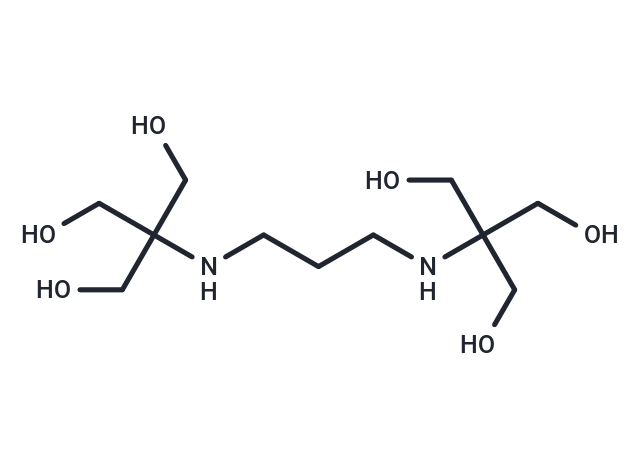
BIS-TRIS propane
CAS No. 64431-96-5
BIS-TRIS propane( —— )
Catalog No. M35872 CAS No. 64431-96-5
BIS-TRIS propane (BTP), a novel multidentate ligand of nickel- and cobalt-based spin clusters, is a metal chelator. BIS-TRIS propane is often used as a zwitterionic buffer for PCR and protein crystallization studies.
Purity : >98% (HPLC)
 COA
Datasheet
HNMR
HPLC
MSDS
Handing Instructions
COA
Datasheet
HNMR
HPLC
MSDS
Handing Instructions
| Size | Price / USD | Stock | Quantity |
| 1 mL x 10 mM in DMSO | 28 | In Stock |


|
| 100MG | Get Quote | In Stock |
|
| 200MG | Get Quote | In Stock |
|
| 500MG | Get Quote | In Stock |
|
| 1G | Get Quote | In Stock |
|
Biological Information
-
Product NameBIS-TRIS propane
-
NoteResearch use only, not for human use.
-
Brief DescriptionBIS-TRIS propane (BTP), a novel multidentate ligand of nickel- and cobalt-based spin clusters, is a metal chelator. BIS-TRIS propane is often used as a zwitterionic buffer for PCR and protein crystallization studies.
-
DescriptionBis-tris propane (BTP) is a water-soluble buffer substance. Bis-tris propane can be used as a suitable buffer for polymerase chain reaction (PCR). Bis-tris propane can enhance the stability or activity of restriction enzymes.
-
In Vitro——
-
In Vivo——
-
Synonyms——
-
PathwayOthers
-
TargetOther Targets
-
RecptorOthers
-
Research Area——
-
Indication——
Chemical Information
-
CAS Number64431-96-5
-
Formula Weight282.33
-
Molecular FormulaC11H26N2O6
-
Purity>98% (HPLC)
-
SolubilityIn Vitro:?H2O : 100 mg/mL (354.20 mM; Ultrasonic)DMSO : 25 mg/mL (88.55 mM; Ultrasonic )
-
SMILESOCC(CO)(CO)NCCCNC(CO)(CO)CO
-
Chemical Name——
Shipping & Storage Information
-
Storage(-20℃)
-
ShippingWith Ice Pack
-
Stability≥ 2 years
Reference
1. K A Eckert, et al. DNA polymerase fidelity and the polymerase chain reaction. PCR Methods Appl. 1991 Aug;1(1):17-24.?
molnova catalog



related products
-
4-methylnonan-5-ol
4-methylnonan-5-ol is a pheromone of red palm weevils and can be used to capture red palm weevils and reduce their harm to agriculture.
-
Farnesylacetone
(5E,9E)-6,10,14-Trimethylpentadeca-5,9,13-trien-2-one is a marine derived natural products found in Sargassum micracanthum.
-
3,6-Disinapoylsucros...
3,6-Disinapoylsucrose
