


 Cart
Cart
 sales@molnova.com


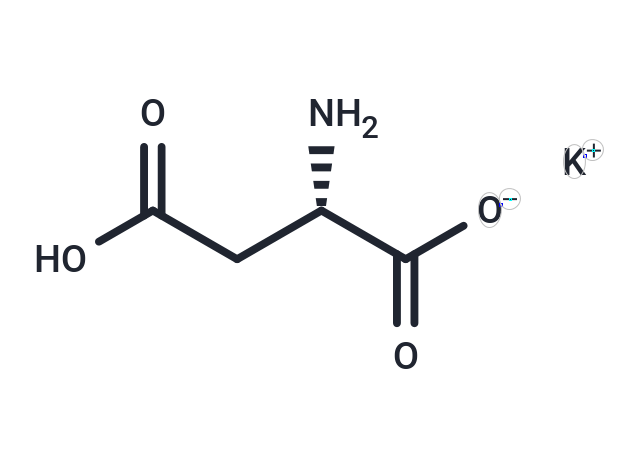
L-Aspartic acid potasium salt
CAS No. 1115-63-5
L-Aspartic acid potasium salt( —— )
Catalog No. M35859 CAS No. 1115-63-5
L-aspartic acid potasium salt(VX-548) is an amino acid widely found in plants and animals.L-aspartic acid potasium salt drives the production of nitrogen oxides, which promotes phagocytosis and contributes to fish survival.
Purity : >98% (HPLC)
 COA
Datasheet
HNMR
HPLC
MSDS
Handing Instructions
COA
Datasheet
HNMR
HPLC
MSDS
Handing Instructions
| Size | Price / USD | Stock | Quantity |
| 100MG | 27 | In Stock |


|
| 200MG | Get Quote | In Stock |
|
| 500MG | 37 | In Stock |
|
| 1G | Get Quote | In Stock |
|
Biological Information
-
Product NameL-Aspartic acid potasium salt
-
NoteResearch use only, not for human use.
-
Brief DescriptionL-aspartic acid potasium salt(VX-548) is an amino acid widely found in plants and animals.L-aspartic acid potasium salt drives the production of nitrogen oxides, which promotes phagocytosis and contributes to fish survival.
-
DescriptionAspartic acid potassium is an amino acid, can be used as a suitable proagent for colon-specific agent deliverly.
-
In Vitro——
-
In Vivo——
-
Synonyms——
-
PathwayOthers
-
TargetOther Targets
-
RecptorOthers
-
Research Area——
-
Indication——
Chemical Information
-
CAS Number1115-63-5
-
Formula Weight171.19
-
Molecular FormulaC4H6KNO4
-
Purity>98% (HPLC)
-
Solubility——
-
SMILES[K+].N[C@@H](CC(O)=O)C([O-])=O
-
Chemical Name——
Shipping & Storage Information
-
Storage(-20℃)
-
ShippingWith Ice Pack
-
Stability≥ 2 years
Reference
1. Hosoya K, et al. Blood-brain barrier produces significant efflux of L-aspartic acid but not D-aspartic acid: in vivo evidence using the brain efflux index method. J Neurochem. 1999 Sep;73(3):1206-11.?
molnova catalog



related products
-
[Ser25] - PKC (19 - ...
[Ser25] - PKC (19 - 31), biotinylated
-
Nitazoxanide
Nitazoxanide, also known by the brand name Alinia, is a synthetic nitrothiazolyl-salicylamide derivative and an anti-protozoal agent.
-
Gadoteridol
Gadoteridolused in the imaging of the central nervous system that is used for a gadolinium-based MRI contrast agent.
