


 Cart
 sales@molnova.com


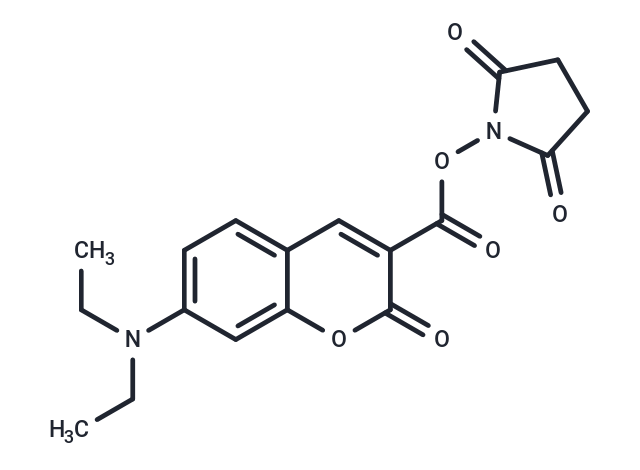
DEAC, SE
CAS No. 139346-57-9
DEAC, SE( —— )
Catalog No. M35844 CAS No. 139346-57-9
DEAC, SE can be used for relevant research in the field of life sciences. Its product number is T64949 and CAS number is 139346-57-9.
Purity : >98% (HPLC)
 COA
Datasheet
HNMR
HPLC
MSDS
Handing Instructions
| Size | Price / USD | Stock | Quantity |
| 5MG | 50 | In Stock |


|
| 10MG | 85 | In Stock |
|
| 25MG | 169 | In Stock |
|
| 50MG | 276 | In Stock |
|
| 100MG | 426 | In Stock |
|
| 200MG | Get Quote | In Stock |
|
| 500MG | 918 | In Stock |
|
| 1G | Get Quote | In Stock |
|
Biological Information
-
Product NameDEAC, SE
-
NoteResearch use only, not for human use.
-
Brief DescriptionDEAC, SE can be used for relevant research in the field of life sciences. Its product number is T64949 and CAS number is 139346-57-9.
-
DescriptionDEAC, SE (7-Diethylaminocoumarin-3-carboxylic acid, SE) is an excellent blue fluorescent building block for labeling amine-containing biomolecules.
-
In Vitro——
-
In Vivo——
-
Synonyms——
-
PathwayOthers
-
TargetOther Targets
-
RecptorOthers
-
Research Area——
-
Indication——
Chemical Information
-
CAS Number139346-57-9
-
Formula Weight358.35
-
Molecular FormulaC18H18N2O6
-
Purity>98% (HPLC)
-
SolubilityIn Vitro:?DMSO : 16.67 mg/mL (46.52 mM; Ultrasonic (<60°C)
-
SMILESCCN(CC)c1ccc2cc(C(=O)ON3C(=O)CCC3=O)c(=O)oc2c1
-
Chemical Name——
Shipping & Storage Information
-
Storage(-20℃)
-
ShippingWith Ice Pack
-
Stability≥ 2 years
Reference



-
QS-21
QS-21, an immunostimulatory saponin, is a powerful vaccine adjuvant that stimulates both Th2 humoral and Th1 cell-mediated immune responses by interacting with antigen presenting cells (APCs) and T cells.
-
Xenopsin-Related Pep...
Xenin-8, a C-terminal octapeptide, is a biologically active fragment of Xenin. Xenin is a 25-amino acid peptide of the neurotensin/xenopsin family. Xenin-8 stimulates basal insulin secretion and potentiates the insulin response to glucose in a dose-dependent manner (EC50=0.16 nM).
-
3-Methyladipic acid
3-Methyladipic acid is a metabolite of the catabolism of phytanic acid. Patients with adult Refsums disease (ARD) are unable to detoxify phytanic acid by alpha-oxidation and so the w-oxidation pathway is the only metabolic pathway available for phytanic acid degradation.
