


 Cart
Cart
 sales@molnova.com


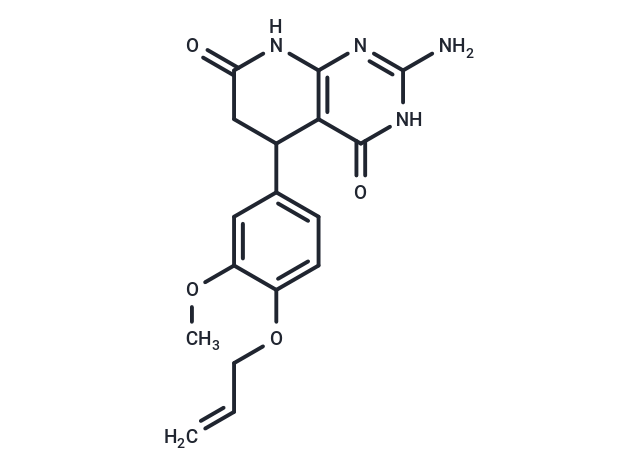
PA-8
CAS No. 878437-15-1
PA-8( —— )
Catalog No. M35242 CAS No. 878437-15-1
PA-8 is a small molecule receptor antagonist for PACAP Type I (PAC1) that is selective, effective, and orally active. PA-8 inhibits PacAP-induced CREB phosphorylation at PAC1- receptors, but does not inhibit VPAC1- or vpac2 receptors.
Purity : >98% (HPLC)
 COA
Datasheet
HNMR
HPLC
MSDS
Handing Instructions
COA
Datasheet
HNMR
HPLC
MSDS
Handing Instructions
| Size | Price / USD | Stock | Quantity |
| 1 mL x 10 mM in DMSO | 41 | In Stock |


|
| 5MG | 37 | In Stock |
|
| 10MG | 68 | In Stock |
|
| 25MG | 147 | In Stock |
|
| 50MG | 253 | In Stock |
|
| 100MG | 445 | In Stock |
|
| 200MG | Get Quote | In Stock |
|
| 500MG | Get Quote | In Stock |
|
| 1G | Get Quote | In Stock |
|
Biological Information
-
Product NamePA-8
-
NoteResearch use only, not for human use.
-
Brief DescriptionPA-8 is a small molecule receptor antagonist for PACAP Type I (PAC1) that is selective, effective, and orally active. PA-8 inhibits PacAP-induced CREB phosphorylation at PAC1- receptors, but does not inhibit VPAC1- or vpac2 receptors.
-
DescriptionPA-8 is a potent, selective and orally active PACAP type I (PAC1) receptor antagonist. PA-8 inhibits the phosphorylation of CREB induced by PACAP in PAC1-, but not VPAC1- or VPAC2-receptor. PA-8 also inhibits PACAP-induced cAMP elevation with an IC50 of 2 nM.
-
In Vitro——
-
In VivoAnimal Model:Male ddY mice (6 weeks old) injected with PACAP (100 pmol) Dosage:100 pmol/5 μL Administration:Intrathecal injection; once Result:Inhibited PACAP-induced aversive responses and mechanical allodynia in vivo.
-
Synonyms——
-
PathwayOthers
-
TargetOther Targets
-
RecptorPACAP
-
Research Area——
-
Indication——
Chemical Information
-
CAS Number878437-15-1
-
Formula Weight342.35
-
Molecular FormulaC17H18N4O4
-
Purity>98% (HPLC)
-
SolubilityIn Vitro:?DMSO : 25 mg/mL (73.02 mM; Ultrasonic (<60°C)
-
SMILESCOc1cc(ccc1OCC=C)C1CC(=O)Nc2nc(N)[nH]c(=O)c12
-
Chemical Name——
Shipping & Storage Information
-
Storage(-20℃)
-
ShippingWith Ice Pack
-
Stability≥ 2 years
Reference
1. Ichiro Takasaki, et al. In Silico Screening Identified Novel Small-molecule Antagonists of PAC1 Receptor. J Pharmacol Exp Ther. 2018 Apr;365(1):1-8.?
molnova catalog



related products
-
BDC 2.5(A)
BDC 2.5(A)
-
Z-Val-Phe|Z-Val-Phe-...
Z-Val-Phe|Z-Val-Phe-OH
-
2-((2,2-Dibenzylhydr...
2-((2,2-Dibenzylhydrazineylidene)methyl)pyridine is a chemical compound.
