


 Cart
 sales@molnova.com


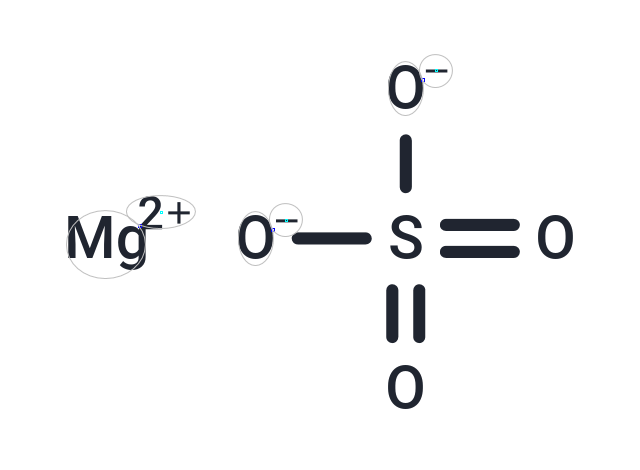
Magnesium sulfate
CAS No. 7487-88-9
Magnesium sulfate( —— )
Catalog No. M35235 CAS No. 7487-88-9
Magnesium sulfate is the preferred anticonvulsant for preventing and controlling eclamptic seizures. Additionally, it is extensively utilized as a tocolytic agent.
Purity : >98% (HPLC)
 COA
Datasheet
HNMR
HPLC
MSDS
Handing Instructions
| Size | Price / USD | Stock | Quantity |
| 1 mL x 10 mM in DMSO | 43 | In Stock |


|
| 100MG | Get Quote | In Stock |
|
| 200MG | Get Quote | In Stock |
|
| 500MG | Get Quote | In Stock |
|
| 1G | Get Quote | In Stock |
|
Biological Information
-
Product NameMagnesium sulfate
-
NoteResearch use only, not for human use.
-
Brief DescriptionMagnesium sulfate is the preferred anticonvulsant for preventing and controlling eclamptic seizures. Additionally, it is extensively utilized as a tocolytic agent.
-
DescriptionMagnesium sulphate is currently the anticonvulsant of choice for the prevention and control of eclamptic fits. Magnesium sulfate is also widely used as a tocolytic agent.
-
In Vitro——
-
In Vivo——
-
Synonyms——
-
PathwayOthers
-
TargetOther Targets
-
RecptorOthers
-
Research Area——
-
Indication——
Chemical Information
-
CAS Number7487-88-9
-
Formula Weight120.37
-
Molecular FormulaMgSO4
-
Purity>98% (HPLC)
-
SolubilityIn Vitro:?H2O : 25 mg/mL (Ultrasonic)
-
SMILES[O-]S(=O)([O-])=O.[Mg+2]
-
Chemical Name——
Shipping & Storage Information
-
Storage(-20℃)
-
ShippingWith Ice Pack
-
Stability≥ 2 years
Reference
1. Okusanya BO, et al. Clinical pharmacokinetic properties of magnesium sulphate in women with pre-eclampsia and eclampsia. BJOG. 2016;123(3):356-366. ?
molnova catalog



related products
-
cis-Anethol
Anethole is a type of aromatic compound that occurs widely in nature, widely used as a flavoring substance.
-
Valeramide
Valeramide is an amide compound isolated from the roots of Ottonia anisum Spreng.
-
D-Proline
D-proline is an isomer of the naturally occurring amino acid L-Proline. D-amino acids have been found in relatively high abundance in human plasma and saliva. These amino acids may be of bacterial origin but there is also evidence that they are endogenously produced through amino acid racemase activity.
