


 Cart
Cart
 sales@molnova.com


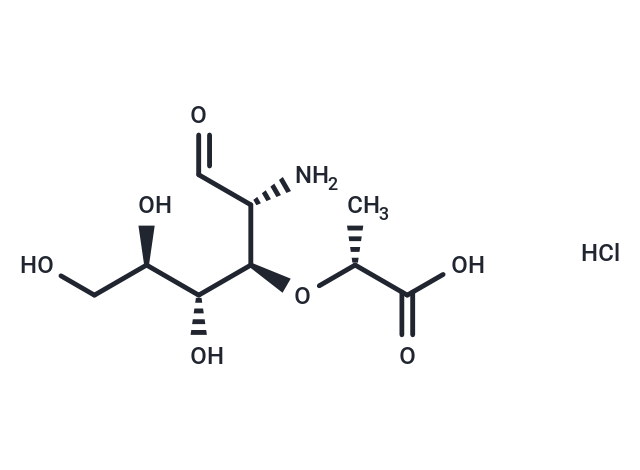
Muramic acid HCl
CAS No. 55226-93-2
Muramic acid HCl( —— )
Catalog No. M35015 CAS No. 55226-93-2
Muramic acid HCl is part of the peptidoglycan in the cell wall of many Gram-positive bacteria.
Purity : >98% (HPLC)
 COA
Datasheet
HNMR
HPLC
MSDS
Handing Instructions
COA
Datasheet
HNMR
HPLC
MSDS
Handing Instructions
| Size | Price / USD | Stock | Quantity |
| 5MG | 459 | In Stock |


|
| 10MG | 657 | In Stock |
|
| 25MG | 1026 | In Stock |
|
| 100MG | Get Quote | In Stock |
|
| 200MG | Get Quote | In Stock |
|
| 500MG | Get Quote | In Stock |
|
| 1G | Get Quote | In Stock |
|
Biological Information
-
Product NameMuramic acid HCl
-
NoteResearch use only, not for human use.
-
Brief DescriptionMuramic acid HCl is part of the peptidoglycan in the cell wall of many Gram-positive bacteria.
-
DescriptionMuramic acid HCl is part of the peptidoglycan in the cell wall of many Gram-positive bacteria.
-
In Vitro——
-
In Vivo——
-
Synonyms——
-
PathwayOthers
-
TargetOther Targets
-
RecptorOthers
-
Research Area——
-
Indication——
Chemical Information
-
CAS Number55226-93-2
-
Formula Weight287.7
-
Molecular FormulaC9H18ClNO7
-
Purity>98% (HPLC)
-
Solubility——
-
SMILES[C@@H]([C@@H]([C@@H](CO)O)O)(O[C@@H](C(O)=O)C)[C@H](C=O)N.Cl
-
Chemical Name——
Shipping & Storage Information
-
Storage(-20℃)
-
ShippingWith Ice Pack
-
Stability≥ 2 years
Reference
molnova catalog



related products
-
(±)-Equol
Equol is a non-steroidal estrogen produced from the metabolism of the isoflavonoid phytoestrogen daidzen by human intestinal microflora.?
-
24-Dihydroxypyrimidi...
24-Dihydroxypyrimidine-5-carboxylic acid (Uracil-5-carboxylic acid) has been obtained from 5-formyluracil by the action of enzyme thymine 7-hydroxylase. It has been used to synthesize N1-alkylated uracil derivatives.
-
2-Chlorobenzene-1,3,...
2-Chlorobenzene-1,3,5-triol is a marine derived natural products found in Rhabdonia verticillata.
