


 Cart
Cart
 sales@molnova.com


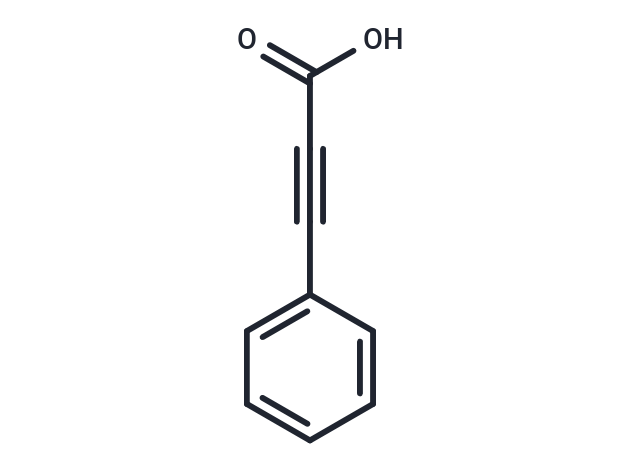
Phenylpropiolic acid
CAS No. 637-44-5
Phenylpropiolic acid( —— )
Catalog No. M34974 CAS No. 637-44-5
Phenylpropiolic acid is an endogenous metabolite.
Purity : >98% (HPLC)
 COA
Datasheet
HNMR
HPLC
MSDS
Handing Instructions
COA
Datasheet
HNMR
HPLC
MSDS
Handing Instructions
| Size | Price / USD | Stock | Quantity |
| 1 mL x 10 mM in DMSO | 28 | In Stock |


|
| 100MG | Get Quote | In Stock |
|
| 200MG | 27 | In Stock |
|
| 500MG | Get Quote | In Stock |
|
| 1G | Get Quote | In Stock |
|
Biological Information
-
Product NamePhenylpropiolic acid
-
NoteResearch use only, not for human use.
-
Brief DescriptionPhenylpropiolic acid is an endogenous metabolite.
-
DescriptionPhenylpropiolic acid is an endogenous metabolite. Phenylpropiolic acid is a click chemistry reagent, it contains an Alkyne group and can undergo copper-catalyzed azide-alkyne cycloaddition (CuAAc) with molecules containing Azide groups.
-
In Vitro——
-
In Vivo——
-
Synonyms——
-
PathwayOthers
-
TargetOther Targets
-
RecptorOthers
-
Research Area——
-
Indication——
Chemical Information
-
CAS Number637-44-5
-
Formula Weight146.14
-
Molecular FormulaC9H6O2
-
Purity>98% (HPLC)
-
SolubilityIn Vitro:?DMSO : 100 mg/mL (684.28 mM; Ultrasonic )
-
SMILESOC(=O)C#Cc1ccccc1
-
Chemical Name——
Shipping & Storage Information
-
Storage(-20℃)
-
ShippingWith Ice Pack
-
Stability≥ 2 years
Reference
molnova catalog



related products
-
Bis-Tos-PEG4
Bis-Tos-PEG4 (PROTAC Linker 16) is a PEG-based PROTAC linker can be used in the synthesis of PROTACs.
-
2-(7-Methoxy-1-napht...
2-(7-Methoxy-1-naphthyl)ethylamine hydrochloride is the impurity of Agomelatine, an antidepressant.
-
Valtrate Hydrine B4
Valtrate hydrine B4 is a natural product for research related to life sciences.
