


 Cart
Cart
 sales@molnova.com


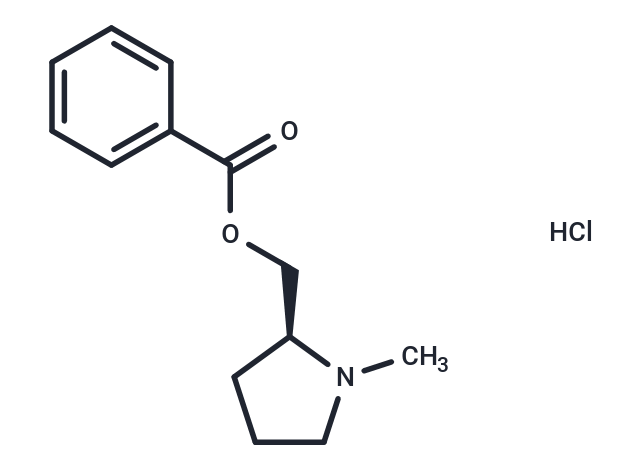
(S)-UFR2709 hydrochloride
CAS No. 2934318-93-9
(S)-UFR2709 hydrochloride( —— )
Catalog No. M34913 CAS No. 2934318-93-9
(S)-UFR2709 (hydrochloride) is a competitive nAChR antagonist with higher affinity for α4β2 nAChRs than for α7 nAChRs.
Purity : >98% (HPLC)
 COA
Datasheet
HNMR
HPLC
MSDS
Handing Instructions
COA
Datasheet
HNMR
HPLC
MSDS
Handing Instructions
| Size | Price / USD | Stock | Quantity |
| 1 mL x 10 mM in DMSO | 48 | In Stock |


|
| 2MG | 29 | In Stock |
|
| 5MG | 46 | In Stock |
|
| 10MG | 70 | In Stock |
|
| 25MG | 141 | In Stock |
|
| 50MG | 207 | In Stock |
|
| 100MG | 323 | In Stock |
|
| 200MG | Get Quote | In Stock |
|
| 500MG | Get Quote | In Stock |
|
| 1G | Get Quote | In Stock |
|
Biological Information
-
Product Name(S)-UFR2709 hydrochloride
-
NoteResearch use only, not for human use.
-
Brief Description(S)-UFR2709 (hydrochloride) is a competitive nAChR antagonist with higher affinity for α4β2 nAChRs than for α7 nAChRs.
-
Description(S)-UFR2709 (hydrochloride) is a competitive nAChR antagonist and displays higher affinity for α4β2 nAChRs than for α7 nAChRs. (S)-UFR2709 (hydrochloride) decreases anxiety and reduces ethanol consumption and ethanol preference in alcohol-preferring rats. (S)-UFR2709 (hydrochloride) acts as an anxiolytic agent and can be used for the study of nicotine addiction.
-
In VitroBrain nicotinic acetylcholine receptors (nAChRs) is a heterogeneous family of pentameric acetylcholine-gated cation channels, which is a molecular target for the treatment of alcohol abuse and dependence.
-
In Vivo(S)-UFR2709 (hydrochloride) (50-100 μg/ml; 3 min and then maintained for another 5 min in a holding tank before testing the swimming behaviour in the test tank for a period of 5 min) produces a decrease in the bottom dwelling for NTT test, and UFR2709 induces a significant and dose-dependent decrease in bottom dwelling time to 52.9 and 87.0 s, respectively at 50 and 100 μg/ml.(S)-UFR2709 (hydrochloride) (50-100 μg/ml) decreases nicotine-evoked mRNA expression of α4 nACh receptor subunit, but UFR2709 has less effect on α4 nACh receptor subunit in the brain of adult zebrafish.(S)-UFR2709 (hydrochloride) (intraperitoneal?injection; 1-10 mg/kg; daily; 17 days) reduces ethanol consumption and ethanol preference and increased water consumption in a dose-dependent manner. The most effective dose of UFR2709 is 2.5 mg/kg, it induces a 56% reduction in alcohol consumption.?(S)-UFR2709 (hydrochloride) does not affect the weight or locomotor activity of the rats.Animal Model:High-alcohol-drinking UChB rats Dosage:10 mg/kg, 5 mg/kg, 2.5 mg/kg, or 1 mg/kg Administration: Intraperitoneal?injection; 1-10 mg/kg; daily; 17 days Result:Did not affect the weight or locomotor activity and reduced ethanol consumption and preference.
-
Synonyms——
-
PathwayCell Cycle/DNA Damage
-
TargetAChR
-
RecptorAChR
-
Research Area——
-
Indication——
Chemical Information
-
CAS Number2934318-93-9
-
Formula Weight255.74
-
Molecular FormulaC13H18ClNO2
-
Purity>98% (HPLC)
-
SolubilityIn Vitro:?H2O : 100 mg/mL (391.02 mM; Ultrasonic) DMSO : 50 mg/mL (195.51 mM; Ultrasonic )
-
SMILESC(OC(=O)C1=CC=CC=C1)[C@H]2N(C)CCC2.Cl
-
Chemical Name——
Shipping & Storage Information
-
Storage(-20℃)
-
ShippingWith Ice Pack
-
Stability≥ 2 years
Reference
1. Gabriel Quiroz, et al. UFR2709, a Nicotinic Acetylcholine Receptor Antagonist, Decreases Ethanol Intake in Alcohol-Preferring Rats. Front Pharmacol. 2019 Dec 3;10:1429.?
molnova catalog



related products
-
(-)-OPC-51803
(-)-OPC-51803 is an antidiuretic hormone V2 receptor agonist used in the treatment of nocturia and urinary incontinence.
-
9-Cyclopentyladenine
9-Cyclopentyladenine (NSC-19486) is an adenylate cyclase inhibitor that blocks cellular morphological differentiation and phosphorylation of specific signaling molecules.
-
TZ3O
TZ3O is an anticholinergic compound with neuroprotective activity.TZ3O ameliorates memory impairment and cognitive decay in Scopolamine-induced Alzheimer's type model in rats, and can be used in the study of Alzheimer's disease.
