


 Cart
Cart
 sales@molnova.com


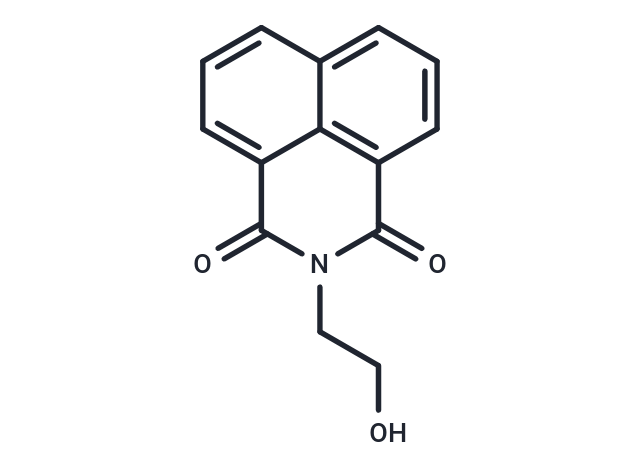
N-(2-hydroxyethyl)-Naphthalimide
CAS No. 5450-40-8
N-(2-hydroxyethyl)-Naphthalimide( —— )
Catalog No. M34877 CAS No. 5450-40-8
N-(2-hydroxyethyl)-Naphthalimide is a fluorescent probe for nucleic acid detection whose fluorescence can be burst.
Purity : >98% (HPLC)
 COA
Datasheet
HNMR
HPLC
MSDS
Handing Instructions
COA
Datasheet
HNMR
HPLC
MSDS
Handing Instructions
| Size | Price / USD | Stock | Quantity |
| 50MG | 44 | In Stock |


|
| 100MG | 62 | In Stock |
|
| 200MG | Get Quote | In Stock |
|
| 500MG | Get Quote | In Stock |
|
| 1G | Get Quote | In Stock |
|
Biological Information
-
Product NameN-(2-hydroxyethyl)-Naphthalimide
-
NoteResearch use only, not for human use.
-
Brief DescriptionN-(2-hydroxyethyl)-Naphthalimide is a fluorescent probe for nucleic acid detection whose fluorescence can be burst.
-
DescriptionN-(2-Hydroxyethyl)-1,8-naphthalimide is a fluorescent probe for detecting nucleic acids and their precursors. The fluorescence of N-(2-Hydroxyethyl)-1,8-naphthalimide will be quenched by these molecules.
-
In Vitro——
-
In Vivo——
-
Synonyms——
-
PathwayOthers
-
TargetOther Targets
-
RecptorOthers
-
Research Area——
-
Indication——
Chemical Information
-
CAS Number5450-40-8
-
Formula Weight241.24
-
Molecular FormulaC14H11NO3
-
Purity>98% (HPLC)
-
Solubility——
-
SMILESOCCN1C(=O)C2=CC=CC3=CC=CC(C1=O)=C23
-
Chemical Name——
Shipping & Storage Information
-
Storage(-20℃)
-
ShippingWith Ice Pack
-
Stability≥ 2 years
Reference
molnova catalog



related products
-
BNP (1-32), rat TFA
Acts as a cardiac hormone with a variety of biological actions including natriuresis, diuresis, vasorelaxation, and inhibition of renin and aldosterone secretion. It is thought to play a key role in cardiovascular homeostasis. Helps restore the body\'s salt and water balance. Improves heart function.
-
Didrovaltrate
Didrovaltrate (Didrovaltratum), isolated from the roots of Valeriana wallichii D.C, is a cytotoxic and antitumor agent.
-
6-Hydroxykaempferol-...
6-hydroxykaempferol 3,6,7-tri-O-β-D-glucoside is a bio-active flavonoid from Carthamus tinctorius with antioxidant capacities in vitro.
